Modal fabric – properties, benefits and uses in clothing
Modal is a textile fiber that offers a particularly comfortable feel against the skin, which makes it a popular choice for close-fitting clothing. The material combines softness with good moisture absorption and a smooth surface. Manufacturers use it for underwear, T-shirts, nightwear, loungewear and other garments where comfort matters. However, modal is more than simply a “soft fabric”: its properties can vary considerably depending on the production process, fiber blends and subsequent textile processing.
What is modal fabric?
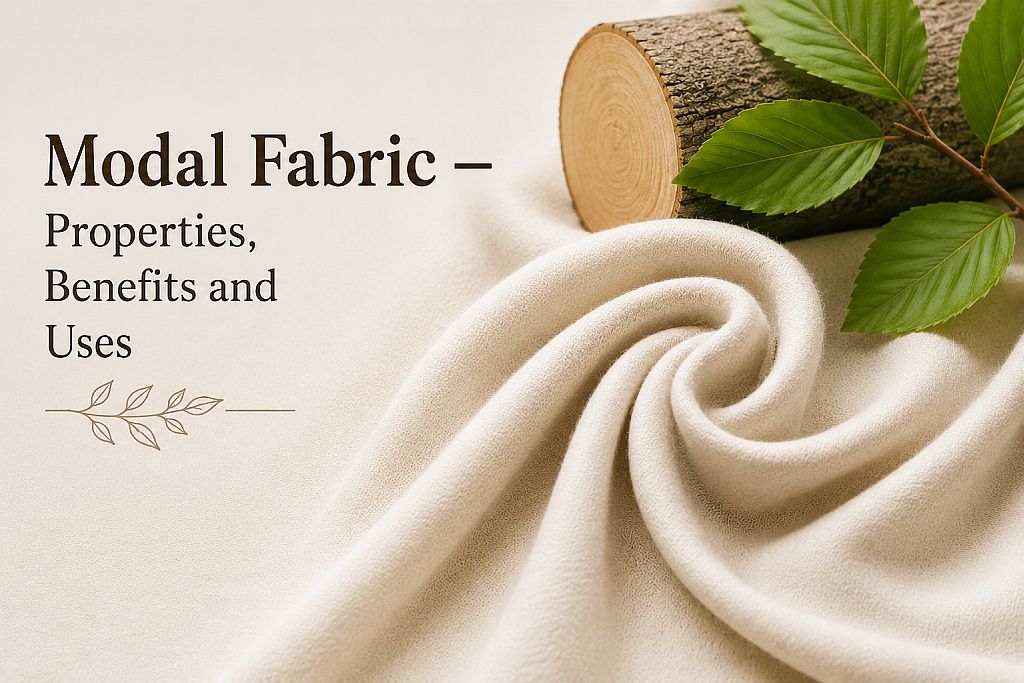
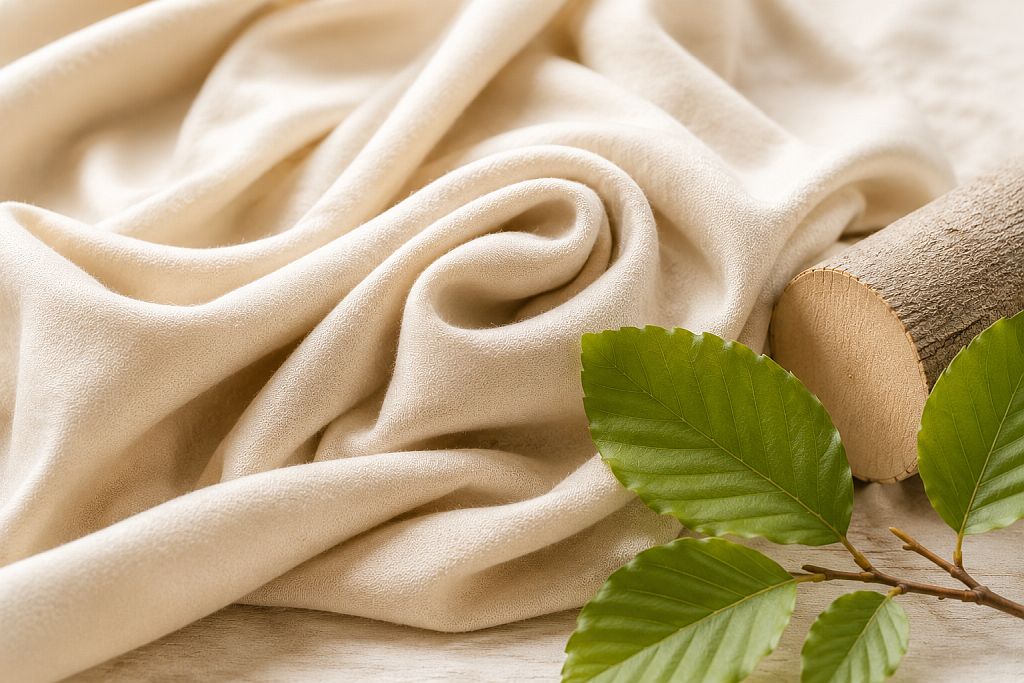
Manufacturers produce modal from wood pulp, typically using beech as the raw material. Unlike cotton, modal does not come directly from a natural plant fiber. Instead, manufacturers dissolve the cellulose and regenerate it into a textile fiber.
Manufacturers developed modal as a member of the viscose fiber family to improve certain properties of conventional viscose. The result is a fiber with a particularly smooth surface and soft feel, making it well suited to lightweight and close-fitting textiles.
For clothing production, the fiber itself is not the only factor that matters. Manufacturers often blend modal with other fibers, such as cotton or elastane. These blends allow them to tailor the fabric to its intended use – for example, combining a soft feel against the skin with greater stretch or improved shape retention.
How is modal made?
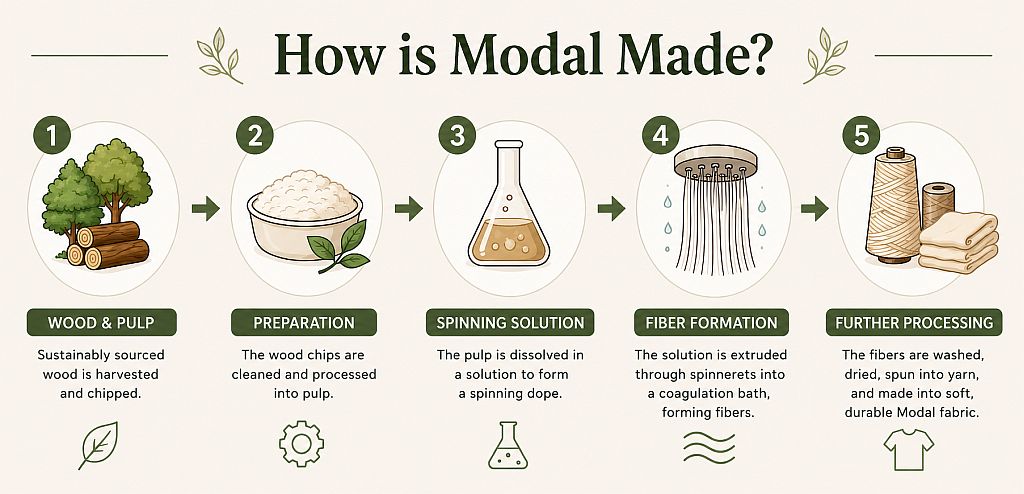
The production process does not begin with finished yarn, but with cellulose derived from wood. Manufacturers first process and chemically modify the cellulose to create a solution that they can spin into fibers. They then push the solution through fine spinnerets, where it regenerates into long fibers.
The production process can be simplified into the following steps:
- Wood and pulp: Cellulose-rich wood is processed into pulp.
- Preparation: The cellulose is prepared for further processing.
- Spinning solution: Chemical processing creates a solution from which fibers can be formed.
- Fiber formation: The solution is passed through spinnerets and regenerated into filaments.
- Further processing: The fibers are cut or processed as staple fibers, spun into yarn, and then turned into textiles.
This also makes it clear why modal cannot be classified in the same way as a conventional natural fiber such as cotton or a fully synthetic material such as polyester. Manufacturers start with a natural raw material, but they create the textile fiber through a technical manufacturing process.
Several factors determine the specific quality of the finished modal fabric, including fiber quality, yarn construction, weaving or knitting methods, and any blends with other fibers.
Modal fabric properties at a glance
Those who work with or wear modal for the first time will usually notice its soft feel immediately. However, this characteristic alone is not enough to assess a fabric. What matters is how the material performs in everyday use – when worn, washed, stretched and combined with different garment cuts.
| Property | Importance for Clothing |
|---|---|
| Soft feel | Comfortable against the skin and particularly suitable for underwear and sleepwear |
| Smooth surface | Creates a soft, comfortable feel and gives the fabric a high-quality appearance |
| Moisture absorption | Can absorb moisture and contribute to a comfortable feel against the skin |
| Breathability | Allows good air circulation and is beneficial for close-fitting garments |
| Good shape retention | Helps garments maintain their original fit for longer |
| Lightweight | Makes modal particularly suitable for lightweight shirts, tops and underwear |
| Fluid drape | Falls softly against the body and works well for flowing garment designs |
| Dyeability | Modal can be dyed evenly and intensely, allowing for a wide range of colors |
This combination makes modal particularly suitable for garments where skin comfort and freedom of movement matter more than a firm or structured fabric surface. For a structured shirt or durable workwear, other materials may often be more suitable, while modal performs particularly well in lightweight, soft and body-hugging garments.
What are the benefits of modal for clothing?
Modal is particularly appealing for clothing that should feel comfortable against the skin and remain easy to wear in everyday life. The fiber combines several properties that can make a practical difference in close-fitting and lightweight garments:
- Soft feel against the skin: The smooth surface feels pleasant and is therefore particularly suitable for clothing worn directly against the skin.
- Good moisture absorption: Modal can absorb moisture and help prevent the skin from feeling damp or clammy.
- Breathable properties: The fabric supports comfortable air and moisture exchange, making it suitable for warmer days as well.
- Fluid drape: Modal falls softly against the body and works well for both fitted and loose-fitting garments.
- Lightweight: Lightweight modal fabrics are suitable for T-shirts, underwear, sleepwear and thin loungewear without adding unnecessary bulk.
- Good shape retention: When properly processed, modal can retain its shape relatively well even after repeated wear and washing.
- Easy to blend with other fibers: Manufacturers can blend modal with cotton or elastane, for example, to tailor the fabric to the requirements of a particular garment.
- Even dyeing: The fiber can be dyed effectively, allowing for intense and consistent colors across different collections.
This combination makes modal highly versatile. It may not suit every type of clothing, but manufacturers can use it particularly effectively for soft, lightweight and close-fitting garments.
What types of clothing are suitable for modal?
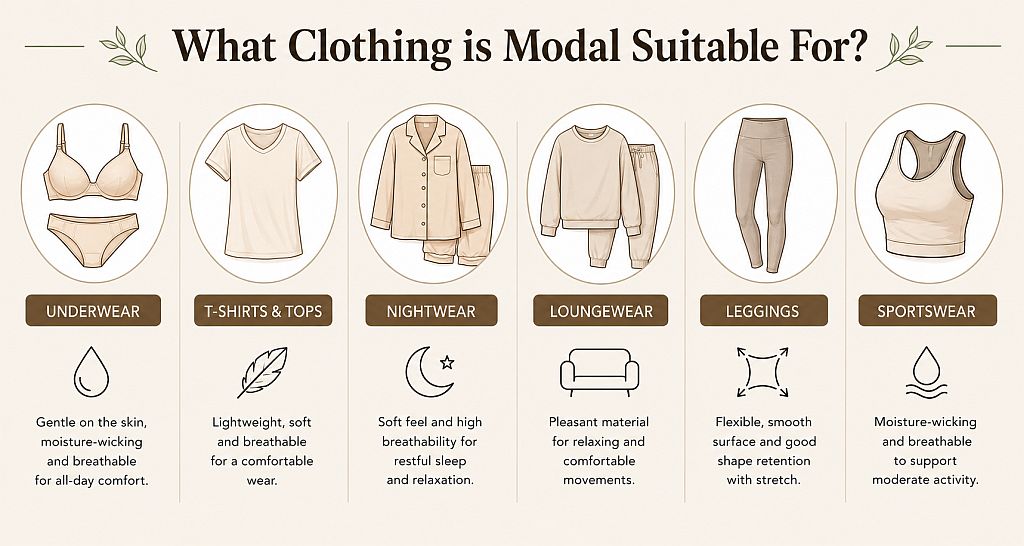
The properties of modal are particularly useful where the fabric remains in contact with the skin for extended periods. This is why the fiber is commonly used for lightweight, soft and comfortable garments. Depending on the fabric quality and fiber composition, modal can be suitable for a range of applications.
| Garment | Why Modal Is a Good Choice |
|---|---|
| Underwear | Soft feel, comfortable against the skin and good moisture absorption |
| T-shirts and tops | Lightweight, smooth and comfortable for direct skin contact |
| Sleepwear | Soft drape and high comfort during extended wear |
| Loungewear | Pleasant fabric feel and good freedom of movement |
| Leggings | Smooth surface and easy to combine with elastane |
| Sportswear | Moisture absorption and comfortable feel during moderate physical activity |
Modal for underwear and close-fitting clothing
When choosing a fabric for underwear, a firm fabric structure is often less important than skin comfort, freedom of movement and effective moisture management. Modal meets these requirements well, which is why manufacturers frequently use it for briefs, undershirts and other close-fitting garments.
Modal for T-Shirts, tops and sleepwear
For T-shirts and sleepwear, the fabric’s fluid drape becomes more important. A lightweight modal fabric can sit softly against the body without feeling as stiff as some more structured fabrics. Manufacturers can also use the material for loose-fitting designs, although the specific fabric construction determines how much drape the finished garment has.
Modal in sportswear and loungewear
Modal can also be an interesting option for sportswear and leisurewear. However, not every modal fabric is automatically suitable for intensive physical activity. The specific fibre blend, fabric construction and desired performance are important factors. For brands working with a sportswear clothing manufacturer, choosing the right modal blend is particularly important to achieve the desired balance between comfort, flexibility and functionality. For lightweight sportswear, yoga, homewear or loungewear, modal can provide a comfortable and soft material base.
Modal, cotton or viscose – which fabric is better?
There is no general answer as to whether modal is better than cotton or viscose. All three materials have different properties and are therefore suitable for different requirements. When choosing a fabric, it is important to consider not only the fiber name, but also the intended use, desired feel and processing.
| Property | Modal | Cotton | Viscose |
|---|---|---|---|
| Feel against the skin | Very soft and smooth | Natural and comfortable | Soft and fluid |
| Moisture absorption | Good | Good | Very good |
| Breathability | Good | Good | Good |
| Drape | Soft and supple | Depending on the fabric, more structured | Very soft and fluid |
| Shape retention | Relatively good | Varies depending on quality | Often more delicate |
| Typical uses | Underwear, T-shirts, sleepwear, loungewear | T-shirts, shirts, underwear, casualwear | Dresses, blouses, T-shirts, flowing garments |
| Elastane blends | Common | Common | Possible |
Modal is particularly interesting when a soft, smooth fabric for close-fitting clothing is required. Cotton, on the other hand, offers a wide range of fabric types and can be considerably more durable depending on the weave or knit. Viscose is especially valued for its fluid drape and is often used for loose-fitting garments.
For clothing production, this means: The key question is not “Which fabric is best?” but rather which properties the finished garment actually needs. Cut, comfort, care requirements and desired durability should all be considered together.
Is modal a sustainable fabric?
Modal is often associated with a natural origin because the fiber is made from cellulose. However, this alone does not automatically make a fabric sustainable. What matters is where the cellulose comes from and under what conditions the fiber is produced.
When assessing modal, it is therefore worth looking at several aspects:
- Raw material source: It is important to know which forests or wood sources the cellulose comes from and whether they are responsibly managed.
- Manufacturing process: The regeneration of cellulose involves chemical processes. Modern production methods can recover and reuse a large proportion of the chemicals involved.
- Material origin: Certifications and traceable information from the fiber manufacturer can help provide a clearer picture of the material’s origin and production conditions.
- Garment lifespan: A fabric is not sustainable simply because of how it is produced. Long-term use and appropriate care also influence the overall environmental impact of a garment.
- Fiber blends: Modal is often blended with cotton or elastane. This can be useful for the garment’s performance, but it can also affect the possibilities for textile recycling later on.
When selecting modal for a clothing collection, it is therefore worth looking beyond the name “modal”. More useful are specific details about the fiber manufacturer, cellulose source and available certifications. This makes it easier to align the choice of material with the actual sustainability requirements of the product. You can find more information here about sustainable fabrics.
What should be considered when processing modal?
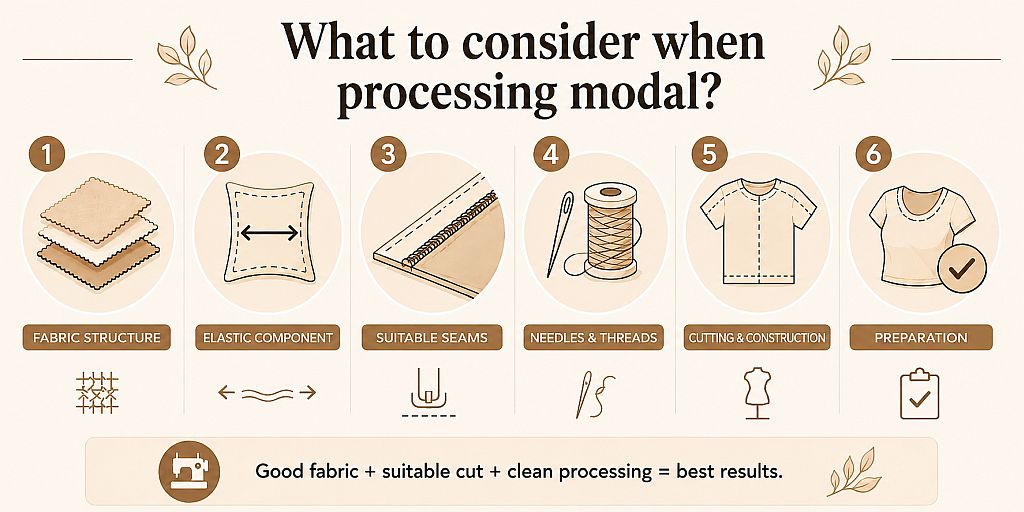
Modal can be used to produce a wide range of garments, but its processing requirements differ from those of a more structured cotton fabric. With lightweight or elastic modal qualities in particular, it is important to coordinate the fabric, pattern and sewing techniques. This helps prevent issues such as distorted seams or loss of the garment’s intended shape.
The following aspects are particularly important during processing:
- Fabric construction: Weight, knit structure and fiber composition influence how the material behaves during cutting and underwear sewing.
- Elastane content: Modal blends containing elastane require the additional stretch to be taken into account when developing the pattern and processing the seams.
- Suitable seams: Lightweight and stretchy fabrics require seam types that can accommodate movement without putting unnecessary stress on the material.
- Needles and threads: The sewing equipment should be selected according to the fabric’s weight, thickness and structure.
- Pattern design: Modal’s soft drape can be an advantage for certain cuts, but precise processing is essential to ensure that the garment fits as intended.
- Preparation before series production: A sample garment or prototype can show at an early stage how the specific fabric behaves during sewing and after the first wash.
Modal demonstrates particularly well that the quality of a finished garment does not depend solely on the raw material. A good fabric also requires appropriate pattern construction and precise workmanship so that its properties are fully reflected in the finished product.
Conclusion – what types of clothing is modal suitable for?
Modal is particularly interesting when a garment requires a soft feel, comfortable skin contact and a fluid drape. This is why the fiber is commonly used for sewing underwear, T-shirts, tops, sleepwear and loungewear. The option of blending modal with cotton or elastane also makes it possible to adapt the fabric to different requirements.
For clothing production, the fiber name alone is ultimately not decisive. Fiber composition, fabric construction, pattern, and workmanship all influence how the finished garment feels and performs in everyday use. Anyone planning to use modal for a specific product should therefore always consider the properties of the actual fabric and its intended application.
Frequently asked questions about modal fabric
Modal is made from natural cellulose, which can, for example, be obtained from beech wood. However, the finished fiber is created through a technical regeneration process. Modal is therefore classified as a regenerated cellulose fiber, rather than a conventional natural fiber such as cotton.
Yes, modal has breathable properties and can absorb moisture. This makes it particularly suitable for garments worn directly against the skin. However, the extent of these properties also depends on the specific fabric construction and fiber blend.
The soft and smooth surface of modal can feel particularly comfortable against the skin. This is why the fiber is often used for underwear, sleepwear and other close-fitting garments. However, for sensitive skin, the entire garment should be considered, as dyes, finishes and other fibers in the fabric can also play a role.
Not necessarily. Modal is known for its very soft feel, fluid drape and good moisture absorption. Cotton, on the other hand, is available in a wide range of qualities and constructions and can be more durable or structured depending on the fabric. The better choice depends on the garment and its specific requirements.
Modal can be suitable for lightweight sportswear and leisurewear, particularly when comfort and a soft feel against the skin are priorities. For intensive physical activity, however, specially developed performance fabrics may be more suitable depending on the application. Elastane and other fibers can also be added to modal blends to provide additional properties.
This depends on the specific garment. Some modal textiles can be washed at 40°C, while others require gentler treatment. The care label of the individual garment should always be followed.
With proper care, modal is relatively dimensionally stable. However, excessively high temperatures or unsuitable washing and drying methods can affect the garment’s shape. The recommended washing and drying conditions should therefore be followed.
Modal has a plant-based raw material, but this alone does not automatically make a product sustainable. Factors such as the source of the cellulose, the manufacturing process, chemical management and the lifespan of the finished garment all play a role. Certifications can also provide additional information about production practices.
Care depends on the specific fabric quality and any fiber blends used. In general, gentle washing programs and the temperature stated on the care label are advisable. Excessive heat during drying should be avoided if it is not recommended according to the care instructions.
Despite its many positive properties, modal is not the best choice for every application. The fiber can be more sensitive to high temperatures and unsuitable care than some more durable textile materials. Its environmental impact also depends heavily on the manufacturing process and the source of the cellulose. For highly durable workwear or performance clothing, other fibers may therefore be better suited to the specific requirements.
That depends on the intended use. Modal provides a soft, comfortable feel against the skin and is particularly suitable for underwear, T-shirts and loungewear. Polyester, on the other hand, is dimensionally stable, durable and versatile for functional clothing. For intensive sports or technical textiles, polyester may therefore offer advantages, while modal stands out for comfort and skin feel.