Boucle fabric – properties, care, types and uses
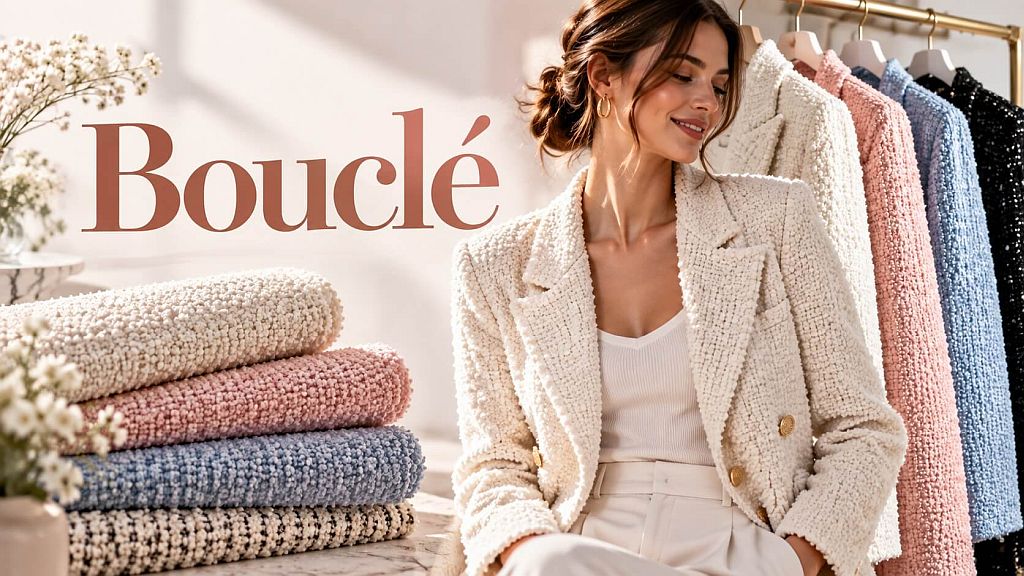
Bouclé is one of the fabrics that has made a remarkable comeback in recent years. Its characteristic, textured surface with small loops and knots immediately gives garments a distinctive look and feel. Unlike many other materials, however, bouclé is not a separate fiber but a specific processing technique that can be made from different fibers. In this article, we explain exactly what bouclé is, which properties characterize the fabric, what varieties are available, and how to properly care for garments made from this material.
What exactly is bouclé? Origin and production
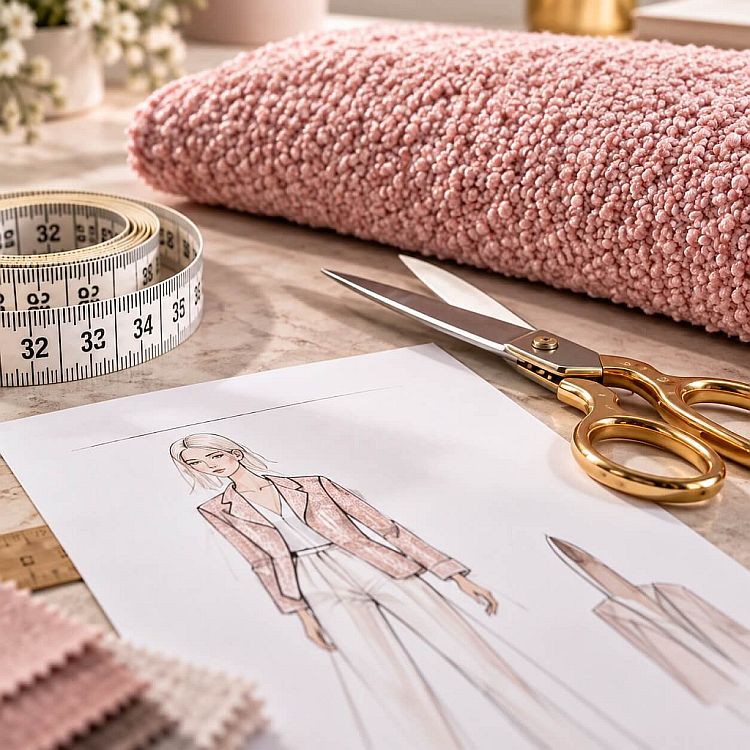
The term bouclé comes from French and roughly means “curled” or “looped” – an apt description of the characteristic appearance of this material. It is important to understand that bouclé does not refer to a specific fiber, but rather to a special yarn structure or weaving technique that can be made from various materials.
The typical structure is created through a special twisting process in which several yarns with different tensions are twisted together. One yarn is fed more loosely than the other, creating small loops and knots on the surface. This novelty yarn is then woven or knitted into a fabric, creating the unmistakable, textured appearance that makes bouclé so easy to recognize.
Historically, bouclé originated in the classic French fashion tradition, but over time it was adapted far beyond its original application and can now be found across a wide range of price and quality segments.
What are the characteristic properties of bouclé fabric?
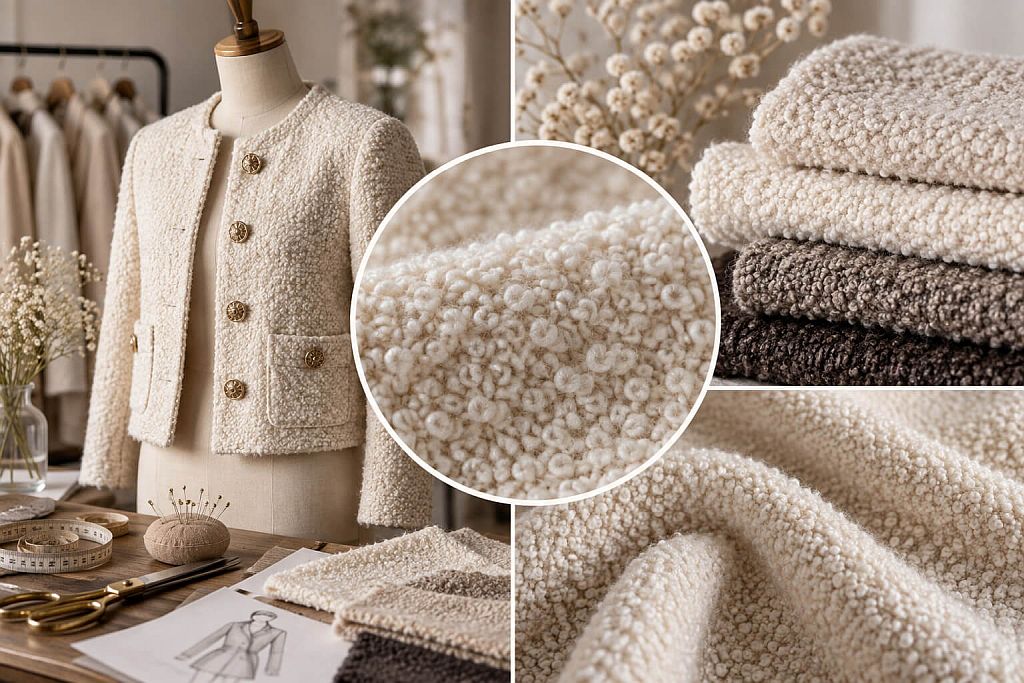
The most striking characteristic of bouclé is undoubtedly its texture: the small loops and knots give the fabric a three-dimensional, tactile appearance that clearly distinguishes it from smooth woven fabrics. This structure makes bouclé visually interesting without the need for additional patterns or prints.
Other characteristic features include:
- Higher fabric weight: Due to its special yarn structure, bouclé is generally heavier and denser than smoothly woven fabrics, giving it a certain degree of stiffness and stability.
- Good insulating properties: The loose, loop-rich structure traps air, which means that bouclé garments often feel warmer than smoother materials of a similar thickness.
- Lower elasticity: Compared with classic stretch materials such as jersey, bouclé is significantly less elastic, which directly affects the cut and fit.
- Tendency to fray: The open loop structure makes cut edges more susceptible to fraying, which is an aspect that requires particular attention during processing.
This combination of appearance and feel makes bouclé a material that stands out primarily for its visual and tactile character rather than for functional properties such as stretch or moisture management.
Overview of bouclé types
Since bouclé is primarily a processing technique, the different varieties mainly differ in terms of the fiber base used.
Wool bouclé
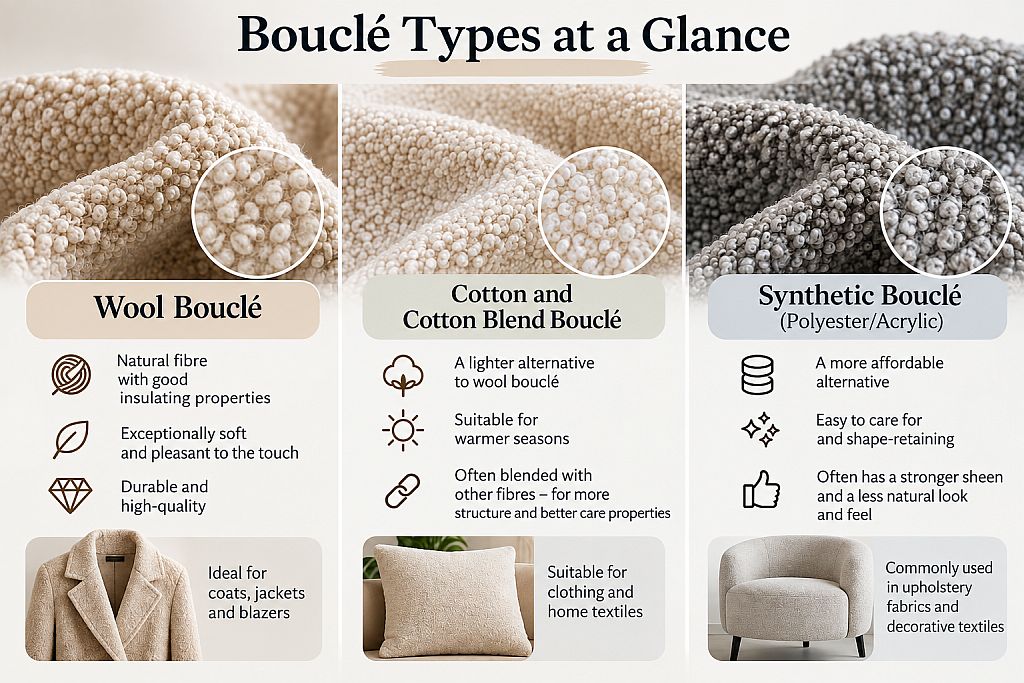
Wool bouclé is considered the classic and original variety. The natural wool fiber further enhances the material’s insulating properties and gives the fabric a particularly soft and pleasant feel. Designers have traditionally used wool bouclé for high-quality coats, jackets and blazers because the fiber gives the fabric additional shape stability.
Cotton and cotton-blend bouclé
Cotton bouclé offers a lighter alternative to the classic wool version and suits warmer seasons or garments worn closer to the body better. Manufacturers often blend cotton with other fibers to enhance the texture or improve the fabric’s care properties.
Synthetic bouclé (polyester/acrylic)
Synthetic varieties made from polyester or acrylic offer a more affordable and easier-care alternative to natural fibers. These fabrics retain their shape well, but compared with wool or cotton bouclé, they tend to have a more artificial sheen and a less natural feel.
Bouclé compared with other fabrics
To better understand the characteristics of bouclé, it is useful to compare it with other commonly used materials:
| Material | Structure | Elasticity | Uses | Care requirements |
|---|---|---|---|---|
| Bouclé | Textured, loop-rich | Low | Jackets, blazers, accessories | Medium to high, depending on fiber base |
| Jersey | Smooth, knitted | High | Loungewear, T-shirts, underwear | Low |
| Tweed | Coarsely woven, flat | Very low | Coats, classic suits | High, usually dry cleaning |
Compared with jersey, which stands out for its high elasticity and smooth structure, bouclé primarily impresses with its visual and tactile character. Compared with tweed, which is also structured but flat-woven, bouclé is clearly distinguished by its three-dimensional looped appearance – although similar clothing categories are often used for both fabrics.
What is bouclé fabric best suited for?
The distinctive structure of bouclé largely determines which garments show the material at its best.
Jackets, blazers and coats
The classic application of bouclé is structured outerwear such as jackets, blazers and coats. The stiffness and shape stability of the material are ideal for cuts that are intended to retain a certain structure without feeling rigid or uncomfortable.
Loungewear and casual collections
In recent years, bouclé has also increasingly found its way into more relaxed collections, for example in cardigans, loose-fitting tops or loungewear sets. Here, the material is often combined with softer, more elastic fabrics to combine structure and comfort.
Accessories (bags, collars, details)
Bouclé is also very well suited to smaller applications such as bags, collars or decorative details on garments. Since only limited fabric areas are used in these applications, the characteristic texture can be used deliberately as a visual highlight without the lower elasticity of the material becoming a major issue.
What should be considered when working with bouclé?
Working with bouclé presents some specific requirements in terms of cutting and sewing techniques that differ considerably from those of smooth fabrics.
Because the open loop structure tends to fray, cut edges should be carefully finished – for example with an overlock machine or additional binding. Precise cutting is particularly important when working with bouclé, as the fabric’s structure cannot easily be corrected if the cut is inaccurate.
Due to its lower elasticity and greater stiffness, bouclé is also often combined with a lining to improve comfort and provide additional stability to the garment edges. For seams, a slightly larger seam allowance is recommended so that adjustments can be made if necessary without damaging the characteristic structure of the fabric.
Care instructions for bouclé garments
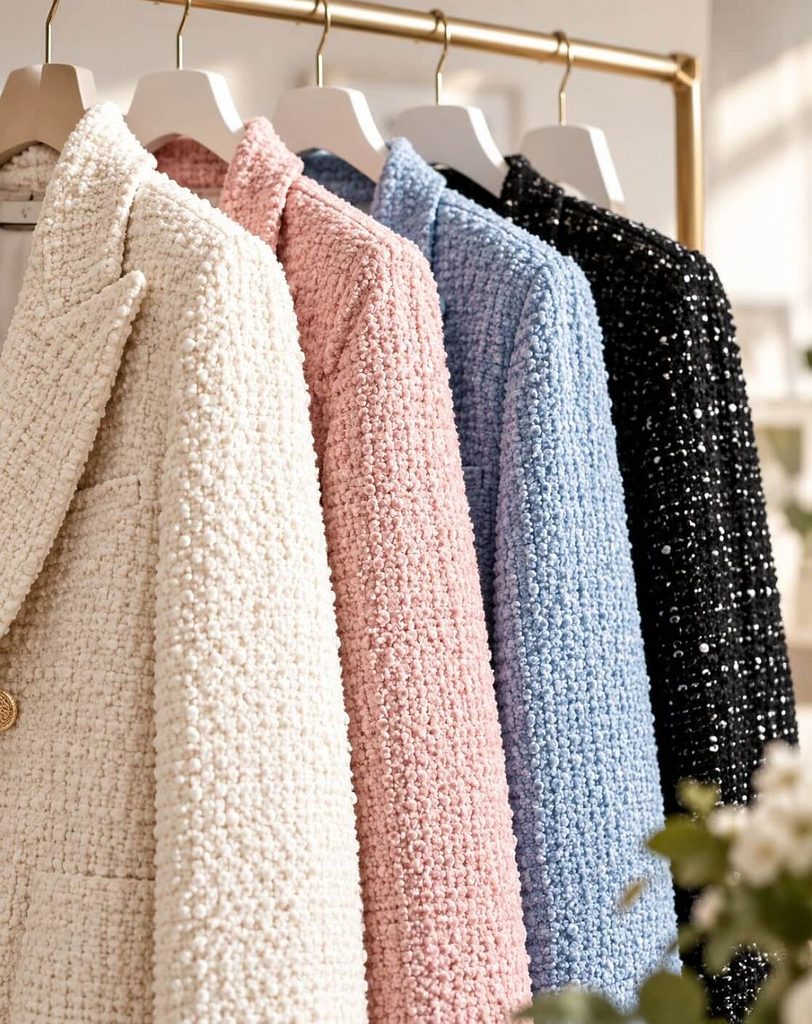
- Consider the fiber base: Care depends on whether the bouclé is made from wool, cotton or synthetic fibers.
- Wool bouclé: Usually dry clean or carefully hand wash at a low temperature, as wool can easily felt or shrink.
- Cotton bouclé: Gentle machine washing at a low temperature is generally possible.
- Synthetic bouclé: Usually easier to care for and less sensitive during washing.
- Avoid friction: The loop structure can be damaged by strong mechanical friction and may be prone to pilling.
- Dry flat: Bouclé garments should preferably be dried flat so that they retain their shape and do not stretch under their own weight.
- Check the care label: Specific care instructions can vary considerably depending on the material composition. Our article on textile labels explains how to correctly interpret the individual care symbols.
- Choose the right bouclé: Wool bouclé, for example, is suitable for elegant jackets, while synthetic varieties can be a practical option for everyday wear.
Conclusion
Bouclé is characterized above all by its distinctive looped structure, pleasant feel and versatile appearance. Since it is not a specific fiber but rather a special yarn and processing technique, its properties and care requirements can vary considerably depending on the material base. Wool, cotton and synthetic bouclé are therefore suitable for different applications. The fabric is particularly often used for jackets, blazers, coats and selected accessories. Anyone working with or wearing bouclé should pay particular attention to its lower elasticity, sensitive loop structure and specific care requirements.
FAQ – Frequently asked questions about bouclé fabric
Bouclé is not a specific fiber but rather a special yarn and processing technique. Different yarn tensions create the characteristic loops and knots on the surface of the fabric.
Bouclé generally has low elasticity. Compared with jersey or other stretch knits, the fabric gives significantly less.
Bouclé can be made from various types of fibers. Wool, cotton, polyester and acrylic are commonly used. Blends of different fibers are also possible.
Bouclé is particularly often used for jackets, blazers and coats. It can also be used for cardigans, loungewear, bags, collars and decorative details.
This depends on the fiber base. Synthetic bouclé is generally easier to care for, while wool bouclé may require particularly gentle care or dry cleaning. The care label should always be followed.
Not all bouclé fabrics are suitable for machine washing. Depending on their composition, cotton and certain synthetic varieties can be washed gently, while wool bouclé often requires different care.
Bouclé should preferably be dried flat. This helps prevent the garment from stretching or losing its shape under its own weight.
Due to its characteristic loop structure, bouclé can be prone to pilling when exposed to strong mechanical friction. Gentle handling and avoiding unnecessary friction can help reduce this.