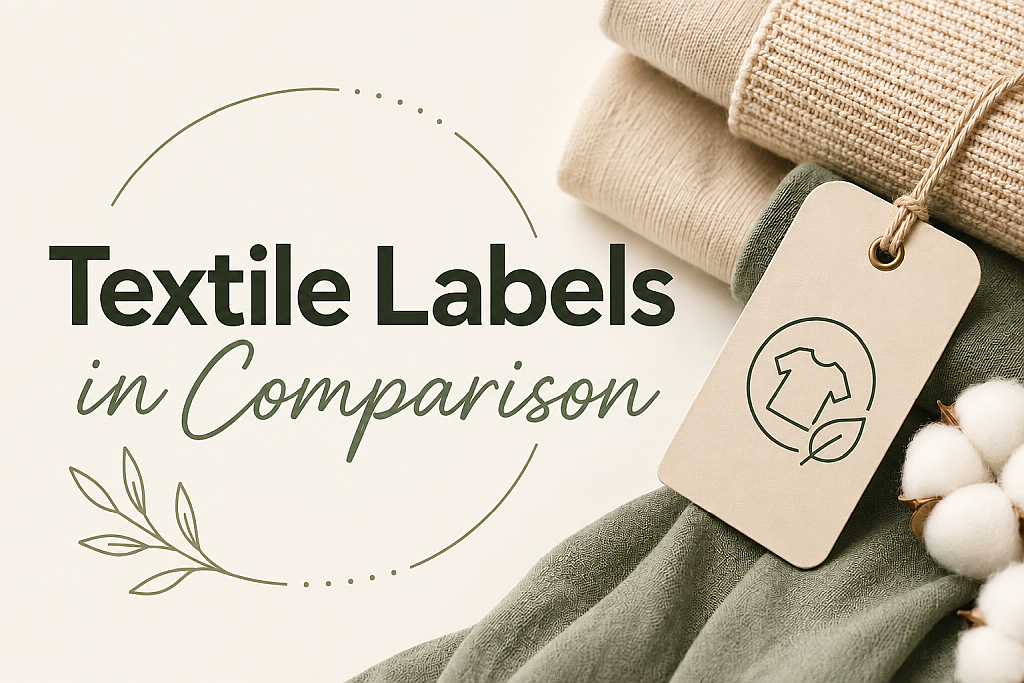
Textile labels for clothing compared – which certifications really matter for clothing?
The demand for transparently produced clothing is steadily growing. More and more consumers and companies want to know what materials textiles are made from, under what conditions they are produced, and whether certain environmental or quality standards have been met. This is where textile labels play an important role: they are intended to provide guidance and show which requirements a product or manufacturing process meets.
For clothing brands, retailers and manufacturers, certifications have long been more than just a marketing tool. They can be an important factor when selecting materials, suppliers and production partners. Especially for sewing underwear, sportswear, children’s clothing and sustainable collections, companies are increasingly looking for certified fabrics and traceable production processes.
However, the wide range of different labels does not always make the choice easy. While some certifications primarily confirm that textiles are free from harmful substances, others focus on ecological materials, recycling or social standards throughout the supply chain.
In this article, we look at which textile labels are particularly relevant, who is behind the certifications and how important standards such as OEKO-TEX®, GOTS, GRS and bluesign® differ from one another.
What are textile labels and why are they important?
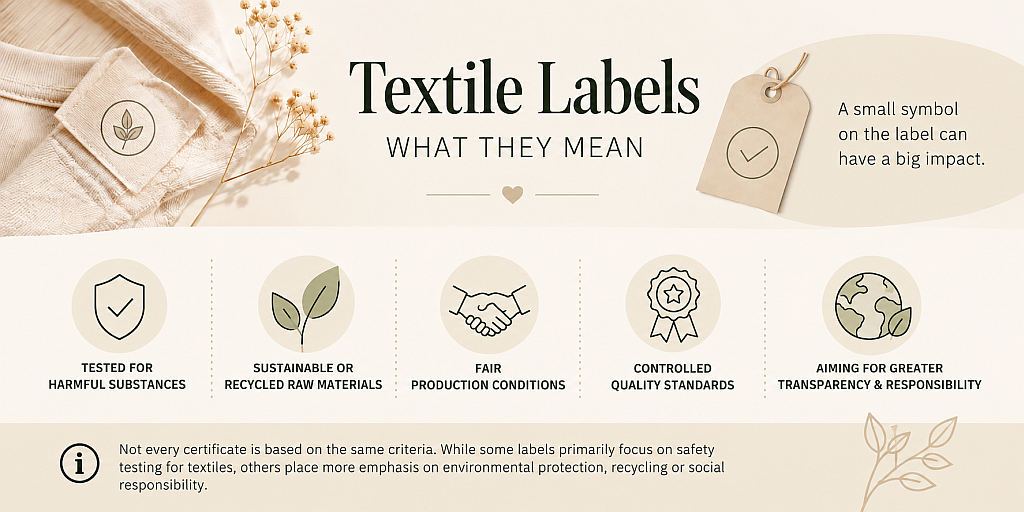
A small symbol on a label can have significant meaning today. Textile labels provide guidance for consumers and businesses and indicate that certain requirements relating to materials, production or quality have been tested.
This is particularly important in the clothing industry, as a garment goes through many production steps – from selecting the fibres to the finished garment. A label can help provide more information about a product’s origin and the materials used.
Textile labels can confirm, among other things:
- Materials tested for harmful substances
- Sustainable fabrics or recycled raw materials
- Fair production conditions
- Controlled quality standards
- However, not every certification stands for the same criteria. While some labels primarily assess the safety of textiles, others focus on environmental protection, recycling or social responsibility.
You can also read our article about how to read textile labels. It provides a detailed explanation of the symbols found on clothing care labels.
Who issues textile labels and who checks the standards?
Textile labels are generally backed by independent organisations, standard-setting bodies or recognised certification bodies. They develop the requirements, define testing procedures and check whether companies comply with the relevant criteria.
A label is not simply awarded by the manufacturer itself. Depending on the certification, materials, production processes or the entire supply chain may be assessed. This can include laboratory tests, document checks or audits of suppliers and manufacturing facilities.
Well-known organisations and standards in the textile industry include:
- OEKO-TEX® – tests textiles for harmful substances and assesses their safety for human health.
- GOTS (Global Organic Textile Standard) – covers environmental and social criteria throughout the entire supply chain.
- GRS (Global Recycled Standard) – assesses the use of recycled materials and compliance with specific production requirements.
- bluesign® – focuses on the responsible use of chemicals and resources.
For clothing companies, it is important not only to look for a certification but also to understand what requirements it actually covers. Each standard has a different focus and addresses different aspects of the quality, sustainability or production of a textile product.
The most important textile labels for clothing compared
The number of different textile labels can seem confusing at first glance. Not every certification assesses the same areas: some focus on testing textiles for harmful substances, while others address organic raw materials, recycling, fair working conditions or environmentally responsible production processes.
For clothing companies, it is therefore important to understand the differences between the individual standards. Depending on the product category, target audience and brand strategy, a different certification may be particularly relevant.
| Textile label | Focus | Particularly relevant for |
|---|---|---|
| OEKO-TEX® Standard 100 | Testing for harmful substances and product safety | Underwear, children’s clothing, everyday clothing |
| GOTS | Organic fibres, environmental and social standards | Sustainable fashion, natural textiles |
| Fairtrade Cotton | Fair conditions in cotton production | Cotton clothing |
| Better Cotton (BCI) | More sustainable cotton production | Cotton products |
| Global Recycled Standard (GRS) | Recycled materials and traceability | Recycled textiles |
| Recycled Claim Standard (RCS) | Verification of recycled fibres | Products containing recycled materials |
| The Green Button | Sustainable textile production | Clothing with verified social and environmental standards |
| bluesign® | Chemical management and resource-efficient production | Functional and sportswear |
OEKO-TEX® Standard 100
OEKO-TEX® Standard 100 is one of the best-known textile labels worldwide and focuses primarily on textile safety. It tests whether a product contains substances that may be harmful to human health – from the yarn and fabric to the finished garment.
This certification is particularly relevant when manufacturing and sewing sportswear, underwear or children’s clothing.
GOTS (Global Organic Textile Standard)
GOTS is considered one of the strictest standards for sustainably produced textiles. The certification covers not only the use of organic fibres but also environmentally responsible processes and social criteria throughout the entire supply chain.
For brands that focus on sustainable collections, GOTS provides important evidence of responsible textile production.
Fairtrade Cotton
Fairtrade Cotton focuses primarily on the conditions under which cotton is grown. The standard supports fair working conditions and aims to improve the livelihoods of cotton producers.
The label is particularly relevant for companies that want to offer cotton products with a stronger focus on social responsibility.
Better Cotton (BCI)
Better Cotton focuses on more sustainable cotton production. Its goal is to reduce the use of water, chemicals and resources while supporting farmers in adopting more environmentally friendly farming practices.
The certification does not refer only to the finished garment but also to the origin of the cotton used.
Global Recycled Standard (GRS)
The Global Recycled Standard confirms the use of recycled materials and provides greater transparency throughout the supply chain. In addition to the recycled content, it also takes environmental and social criteria into account.
The textile label is commonly used for clothing made from recycled polyester or other recycled fibres.
Recycled Claim Standard (RCS)
The Recycled Claim Standard primarily verifies the amount of recycled materials contained in a product. Compared with the GRS, its focus is more strongly on the traceability of recycled fibres.
It helps companies demonstrate that the recycled materials they use actually come from controlled sources.
The Green Button (Der Grüne Knopf)
The Green Button is a German government-backed textile label that assesses products based on specific sustainability and social criteria. The certification sets requirements for both the product itself and the company behind it.
The label is intended to help consumers make more informed choices when purchasing sustainable clothing.
bluesign®
bluesign® focuses on more environmentally responsible textile production and the responsible use of chemicals. The standard assesses, among other things, materials, production processes and the use of resources.
bluesign® plays a particularly important role in the production of functional and sportswear.
Comparison of the most important textile labels
The most important textile labels differ mainly in the areas they assess. Some standards focus on the absence of harmful substances in textiles, while others address sustainable materials, recycling or fair working conditions. The following overview shows the main focus of each certification.
| Textile label | Testing for harmful substances | Organic fibres | Recycled materials | Fair working conditions | Sustainable production |
|---|---|---|---|---|---|
| OEKO-TEX® Standard 100 | ✓ | – | – | – | partly |
| GOTS | ✓ | ✓ | – | ✓ | ✓ |
| Fairtrade Cotton | – | partly | – | ✓ | ✓ |
| Better Cotton (BCI) | – | – | – | partly | ✓ |
| Global Recycled Standard (GRS) | ✓ | – | ✓ | ✓ | ✓ |
| Recycled Claim Standard (RCS) | – | – | ✓ | – | partly |
| The Green Button | – | partly | partly | ✓ | ✓ |
| bluesign® | ✓ | – | partly | – | ✓ |
The table clearly shows that the individual textile labels pursue different goals. OEKO-TEX® Standard 100 is particularly suitable for products where material safety is a key consideration. GOTS, on the other hand, combines environmental requirements with social criteria throughout the supply chain. Certifications such as GRS and RCS are particularly relevant when recycled materials are used.
For clothing companies, this means that the choice of the right certification always depends on the type of product and the company’s specific requirements. A manufacturer of underwear, for example, needs different certifications than a company developing sustainable sportswear made from recycled fibres.
Which textile label is suitable for which type of clothing?
Not every textile label is suitable for every product category. Depending on the type of clothing, different requirements take centre stage – from testing for harmful substances and sustainable materials to recycling and fair production conditions.
Key examples include:
- Underwear and children’s clothing: OEKO-TEX® Standard 100 is particularly relevant because the label tests textiles for harmful substances and skin compatibility.
- Sustainable fashion and natural textiles: GOTS is suitable for brands that focus on organic fibres, environmentally responsible processes and social standards.
- Sewing thermal underwear and functional clothing: bluesign® and OEKO-TEX® can help companies demonstrate the use of safe materials and responsible production processes.
- Clothing made from recycled materials: GRS and RCS provide transparency regarding the use and origin of recycled fibres.
- Cotton products: Fairtrade Cotton and Better Cotton (BCI) focus on different aspects of sustainable cotton production and social criteria.
The choice of the right textile label therefore always depends on the type of product, the materials used and the requirements of the target audience.
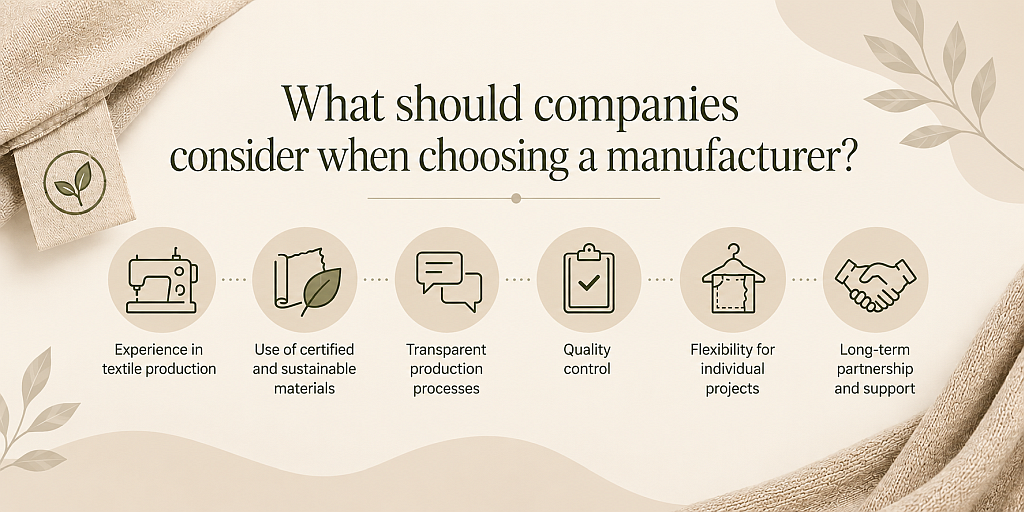
What should companies look for when choosing a manufacturer?
The right textile label is only one part of responsible clothing production. Choosing an experienced manufacturer with transparent processes is equally important, as is ensuring that the manufacturer can actually meet the requirements of the desired certifications.
When selecting a production partner, companies should pay particular attention to the following:
- Experience in textile production: A specialised manufacturer understands the requirements of different materials, cuts and product categories.
- Use of certified materials: Reputable manufacturers can provide traceable information about fabrics, suppliers and existing certifications.
- Transparent production processes: Clear procedures and open communication build trust and make collaboration easier.
- Quality control: Regular checks throughout production help ensure consistently high product quality.
- Flexibility for individual projects: For private-label collections in particular, it is important that the manufacturer can accommodate specific requirements.
A good clothing manufacturer supports brands not only with production but also with selecting suitable materials and standards. This creates the basis for a long-term partnership that brings together quality, transparency and the brand’s values.
Textile labels explained – our conclusion
Textile labels provide important guidance for companies and consumers when choosing clothing. They make certain characteristics of materials and production processes more transparent and help people make more informed choices.
There is no single certification that is the best solution for every type of clothing. While OEKO-TEX® Standard 100 focuses on safety, particularly for textiles worn close to the skin, GOTS places greater emphasis on environmental and social criteria. Other standards such as GRS, RCS and bluesign® are particularly relevant for recycled materials and responsible production processes.
For clothing companies, it is therefore important to select certifications that match their products and target audience. Combined with high-quality materials, careful workmanship and an experienced manufacturer, textile certifications can help build trust and support a transparent brand positioning.
FAQ – Frequently asked questions about textile labels
Some of the best-known textile labels include OEKO-TEX® Standard 100, GOTS (Global Organic Textile Standard), Fairtrade Cotton, Better Cotton (BCI), Global Recycled Standard (GRS) and bluesign®. They differ mainly in whether they assess harmful substances, sustainable materials, recycling or social standards.
The Green Button is a German government-backed textile label that sets specific requirements for sustainable textiles and responsible business processes. It provides consumers with useful guidance, but should always be considered alongside additional information about production and the materials used.
GOTS, Fairtrade Cotton and The Green Button are particularly relevant for fair clothing. These standards take social criteria into account and set requirements for more responsible production conditions.
OEKO-TEX® Standard 100 is one of the best-known and most widely used textile labels in Germany. It is particularly common for clothing that comes into direct contact with the skin, as testing for harmful substances is a central part of the standard.
That depends on the requirements. OEKO-TEX® focuses primarily on testing for harmful substances and product safety, while GOTS also covers organic materials as well as environmental and social criteria throughout the supply chain.
There are various quality labels in the textile sector, each with a different focus. These include OEKO-TEX®, GOTS, GRS, RCS, Fairtrade Cotton, Better Cotton, The Green Button and bluesign®, among others.
Textiles made from tested materials that are free from harmful substances are generally a good choice for skin-friendly clothing. Certifications such as OEKO-TEX® Standard 100 can help identify products whose materials have been tested for safety.
GOTS is managed by the international organisation Global Organic Textile Standard. The standard was developed to establish consistent requirements for the processing of organic fibres as well as environmental and social criteria in textile production.
No, GOTS and OEKO-TEX® have different objectives. OEKO-TEX® primarily tests textiles for harmful substances, while GOTS also sets requirements for organic materials, environmental aspects and social conditions.