How to start a clothing brand step by step?
Starting your own clothing brand often begins with a specific product idea: a distinctive fit, functional sportswear or underwear that stands out from existing products. To turn that idea into a collection you can sell, you need to bring design, materials, production costs and sales potential together.
One of the key decisions concerns manufacturing. If you do not want to sew the garments yourself, you can work with a professional sewing workshop instead of setting up your own production facility. However, you need to prepare your products properly and choose a manufacturer whose expertise matches your planned collection. This guide explains the essential steps involved in launching your first collection and what to consider before placing a production order.
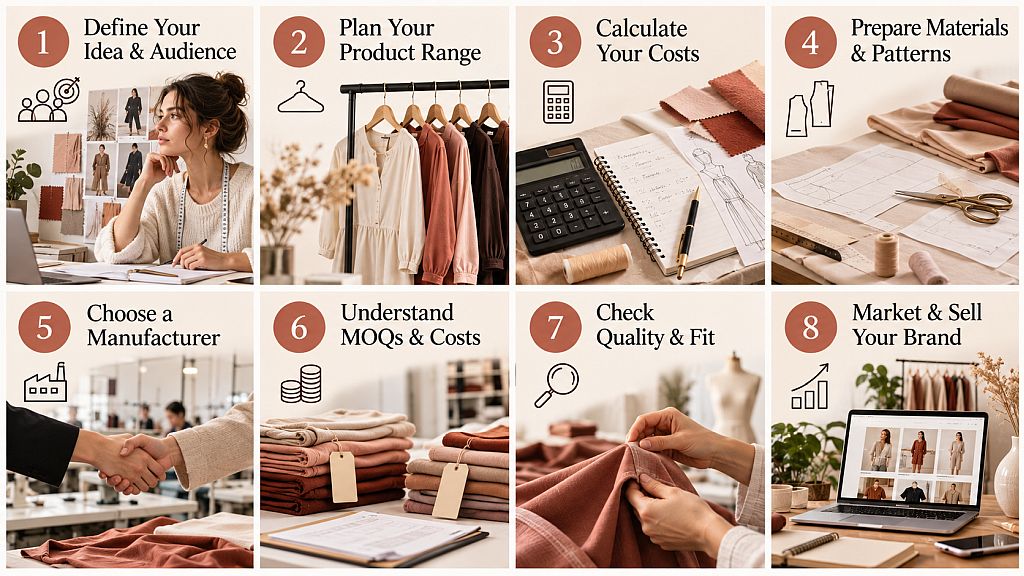
Define Your Business Idea and Target Audience
Before you start a clothing brand, decide which products you want to offer and who you want to reach. A sportswear brand has different requirements for materials and fit than a label specialising in sewing swimwear or underwear. Customer expectations regarding price, functionality and design also vary depending on the target audience.
Research comparable brands and look for customer needs that existing products do not fully address. Perhaps there is a gap in the available size range, a need for more functional sportswear or an opportunity to offer a better fit than competing products. These insights will help you establish a distinctive brand identity instead of simply copying existing offerings.
Write down the key decisions:
- Target audience: Who will buy your products, and what does this customer group need?
- Product range: Which garments do you want to offer?
- Positioning: What makes your brand different from other labels?
- Price range: At what price points do you want to sell your products?
- Sales channels: Will you sell through your own online store, marketplaces or retail partners?
These decisions provide a foundation for planning your collection. They also help you identify the right manufacturing method and find a clothing manufacturer whose specialisation matches your products.
Plan Your Initial Product Range
For your first collection, it makes sense to focus on a manageable group of products. Depending on your brand concept, you could start with one of the following categories:
- Sportswear: sewing tracksuits, Leggings, sports tops and performance T-shirts
- Swimwear: Bikinis, swimsuits and swim trunks
- Loungewear: Shorts, tops and comfortable matching sets
- Underwear: Briefs, sewing bras and undershirts
Decide which styles you want to offer and in which colours and sizes they should be produced. Every additional variation increases the number of individual products you need to manage and affects your order quantities and inventory planning. For example, if you offer several styles in multiple colours and sizes, you need to distribute your available stock sensibly across these options.
Plan your range around expected demand as well as your design ideas. Decide which products will form the core of your collection and which variations you can introduce later. A smaller, well-planned collection makes budgeting easier and gives you an opportunity to see which products resonate with your target audience.
Develop Your Business Plan and Calculate Costs
Before placing a production order, estimate your total financial requirements. Manufacturing is only one part of the budget. You also need to account for branding, sales, logistics and product preparation, all of which require time and money.
| Cost category | What to budget for |
|---|---|
| Product development | Designs, patterns and technical documentation |
| Materials | Fabrics, elastic bands, threads and other components |
| Manufacturing | Cutting, sewing and garment assembly |
| Branding | Logo, labels and packaging |
| Sales and marketing | Online store, product photography and advertising |
| Logistics | Transport, storage and shipping |
Don’t calculate your retail price based on manufacturing costs alone. Payment processing fees, returns, discounts and ongoing business expenses also affect profitability. Work out how much room you have to cover these costs while maintaining a sustainable profit margin.
You should also set aside a financial reserve. When launching a new brand, it is difficult to predict how quickly your first collection will sell. If you invest your entire budget in manufacturing, you may not have enough left to showcase your products, run advertising campaigns or reorder popular styles.
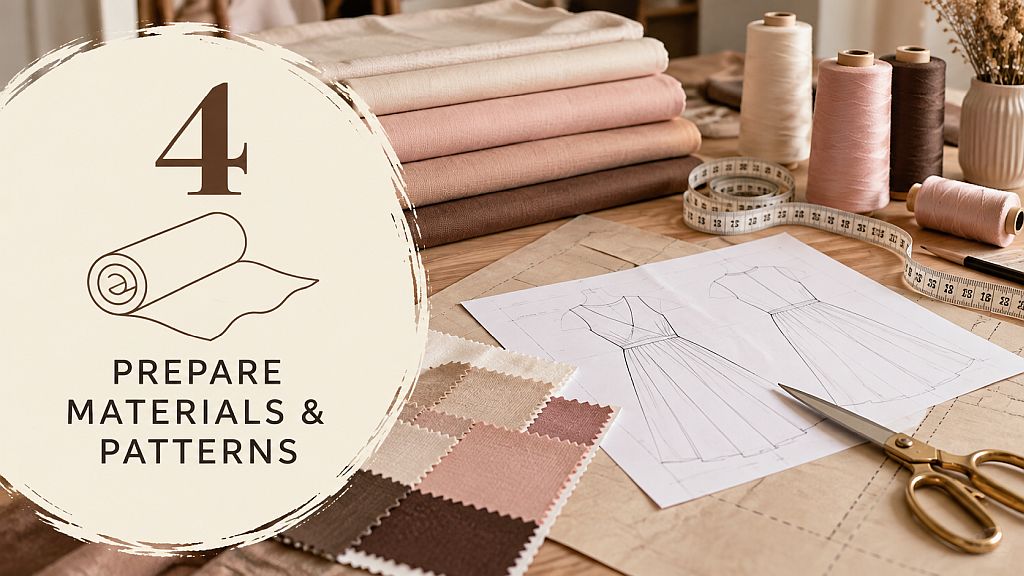
Prepare Materials, Patterns and Technical Documentation
Material selection affects comfort, fit, durability and production costs. The right fabric depends on the garment and how customers will use it.
| Material | Properties and typical uses |
|---|---|
| Cotton | Skin-friendly and breathable; commonly used for underwear, T-shirts and loungewear |
| Polyester | Durable and quick-drying; suitable for sportswear and certain swimwear fabrics |
| Elastane (Spandex) | Improves stretch and helps garments maintain a close fit |
| Modal | Soft and smooth; popular for underwear and lightweight loungewear |
| Polyamide | Lightweight and abrasion-resistant; often used in swimwear and lingerie, depending on the fabric construction |
Fibre composition is only one consideration. Fabric weight, stretch and recovery also need to match the product. A fabric suitable for a loose-fitting T-shirt will not necessarily meet the requirements of a sports bra or swimsuit. For close-fitting garments, it is particularly important to understand how the material behaves during wear and whether it returns to its original shape after stretching.
Before contacting a manufacturer, prepare the essential technical information:
- Patterns and size charts
- Technical drawings showing important construction details
- Fabric composition and required material properties
- Colour specifications and details about seams, fastenings, elastic bands and labels
- Specific requirements for construction and functionality
Your documentation should describe the finished garment as clearly as possible. A technical drawing alone may not be sufficient if important measurements, seam types or construction details are missing. The more precise your specifications, the lower the risk of different interpretations during manufacturing.
Clarify in advance who will supply the patterns, fabrics and other components. These services are not automatically included in every sewing workshop’s offering. If you plan to work with a manufacturer that produces garments according to customer specifications, you need to have the necessary information and materials ready.
Find the Right Clothing Manufacturer
Not every sewing workshop specialises in the same types of garments. For underwear, sportswear and swimwear, experience with stretch fabrics, close-fitting patterns and specialised sewing techniques is particularly important. A manufacturer that mainly works with lightweight woven fabrics may not be the right partner for a collection made from highly elastic materials.
When choosing a manufacturing partner, compare the following factors:
- Product specialisation: Does the manufacturer have experience with your type of collection?
- Minimum order quantity: What is the minimum number of pieces required?
- Quality control: How does the manufacturer check that finished garments meet the agreed specifications?
- Lead times: When can production start, and when is delivery expected?
- Scope of services: Which tasks does the manufacturer handle, and what do you need to prepare yourself?
- Communication: Can you clearly discuss technical requirements, changes and delivery terms?
When making your first enquiry, describe the products you want to manufacture, your approximate quantities and the technical documentation you already have. Include details about the desired materials, colours, sizes and delivery date. This information helps the sewing workshop assess whether your order fits its production capabilities.
Before entering into an agreement, establish whether the manufacturer produces garments exclusively according to your specifications or also offers additional development services. Do not assume that pattern making, material sourcing or sample development is automatically included. Confirm the agreed services, prices and delivery terms in writing. This provides a clear basis for cooperation and helps prevent misunderstandings before costs arise.
Understand Minimum Order Quantities and Production Costs
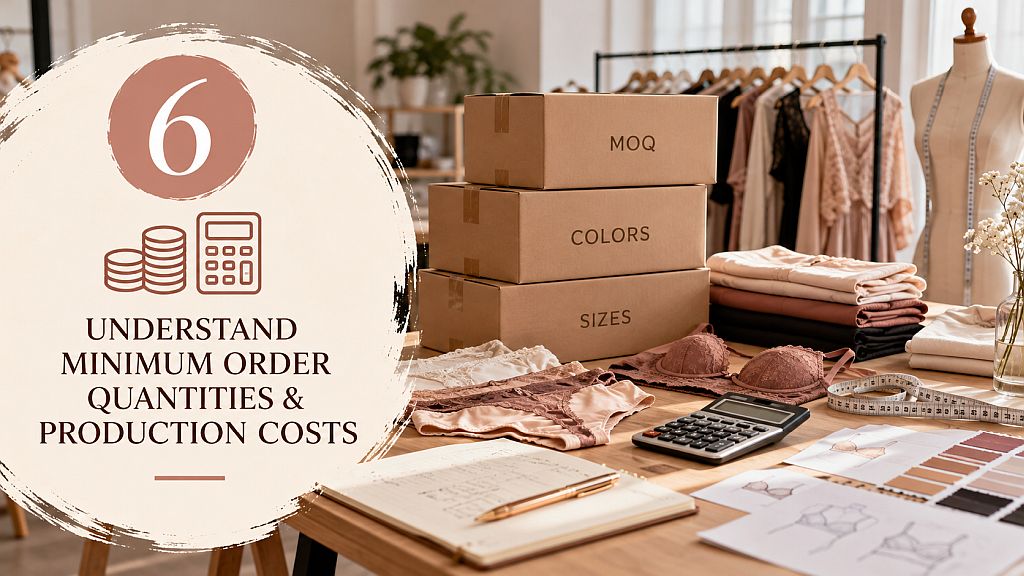
The minimum order quantity (MOQ) is the smallest number of units a manufacturer is willing to produce. It may apply to the entire order, an individual style or a specific colour variation. Ask exactly how the MOQ is calculated for your collection.
For budgeting purposes, it is important to understand how the minimum quantity is distributed across styles, colours and sizes. A larger production run can reduce the cost per garment, but it also ties up more capital and increases the risk of unsold inventory. Smaller quantities reduce your initial stock requirements, although not every manufacturer can accommodate them.
Request a quotation that clearly outlines the services included in the price. Check whether materials, garment assembly, labelling and packaging are covered or charged separately. You should also ask about potential additional costs for special features or non-standard requirements.
Compare quotations based on total costs and the services provided, not just the price per unit. The cheapest manufacturing option is not necessarily the most cost-effective if the minimum quantities, quality or delivery terms do not suit your business model.
Check Quality and Fit Before Mass Production
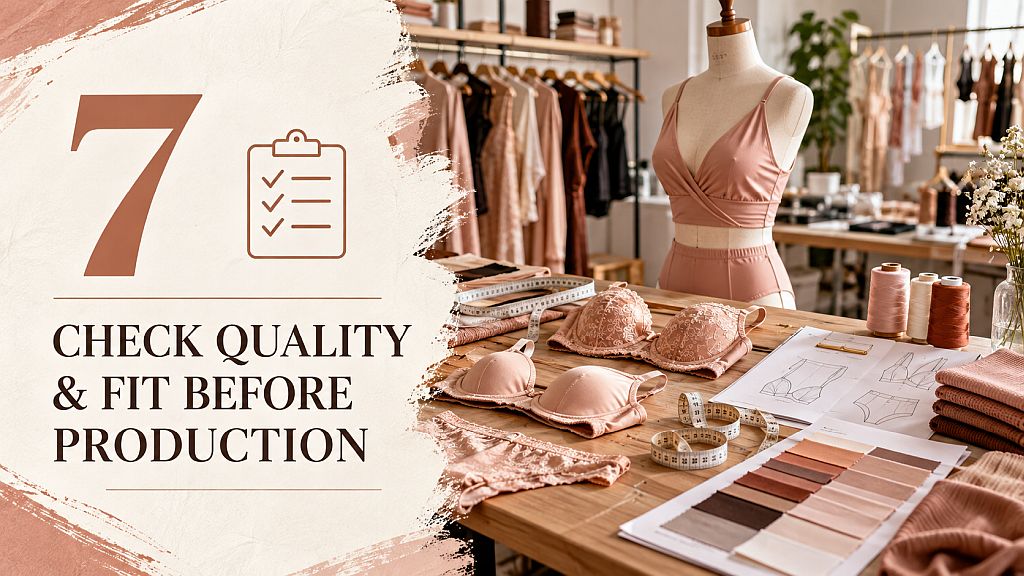
Even small deviations can affect the fit and comfort of underwear, sportswear and swimwear. A garment that is too tight, uneven seams or elastic that does not recover properly can make a product uncomfortable to wear. Correcting these problems after manufacturing a large quantity may require considerable additional work and expense.
For this reason, quality requirements should be clearly defined before production begins. Pay particular attention to the following:
- Measurements and fit: Do the garments match the agreed size charts?
- Seams and construction: Are the seams neat, even and sufficiently durable?
- Fabric performance: Does the material retain its shape and elasticity?
- Components: Do the colours, fastenings, elastic bands and labels match your specifications?
- Overall appearance: Does the finished garment match the intended design and purpose?
Agree with the manufacturer on how quality will be checked and how deviations will be handled. If samples or fit assessments are part of the process, clarify the procedure and responsibilities in advance. Evaluate the results against the agreed requirements rather than relying on appearance alone.
Document the criteria that determine whether a product is ready for production. These may include measurements, fabric performance and specific construction details. The clearer these criteria are, the easier it will be to identify and assess deviations later. This approach helps you detect problems before they affect a larger production run.
Market and Sell Your Clothing Brand
When your collection is ready to launch, you need to present it convincingly. High-quality product photography, accurate descriptions and reliable size information help customers make informed purchasing decisions. For clothing in particular, images and product details should clearly communicate fit, materials and construction.
You can sell through your own online store, marketplaces or retail partners. Social media provides an opportunity to share the development of your brand, introduce new collections and connect with potential customers. The right sales channels depend on your target audience, budget and brand positioning.
Once your products are on sale, monitor which styles and sizes attract the most interest and why customers return certain items. Questions about materials, fit and care can also provide valuable insights. Use this information to plan restocking more accurately and make targeted improvements to your next collection.
Conclusion: Build Your Clothing Brand Step by Step
If you want to learn how to start a clothing brand, begin by planning your product concept, budget and manufacturing process together. A clearly defined initial collection, suitable materials and complete technical documentation make it easier to work with a sewing workshop. Clarifying minimum order quantities, quality requirements and delivery terms early on also creates a solid foundation for your launch.
The goal is not to offer as many styles as possible from day one, but to develop a collection that suits your target audience and available budget. With realistic cost calculations and clear agreements with your manufacturing partner, you can assess risks more effectively and plan your next steps with greater confidence.
Whether you want to start a clothing brand on a small scale or build a larger fashion business, careful preparation helps you make better decisions about production, inventory and future growth.
FAQ – How to Start a Clothing Brand
The cost depends on your product range, production quantities, materials and sales model. In addition to manufacturing, you should budget for branding, an online store, product photography, marketing and logistics. Product preparation and a financial reserve should also be included in your calculations.
Yes. You do not need to know how to sew to launch a clothing brand. However, you need to define your product requirements, calculate costs realistically and prepare properly for cooperation with a manufacturer. Depending on your products, professional support with technical specifications may also be useful.
Look for a manufacturer with experience in your product category. Compare minimum order quantities, quality standards, lead times and the actual scope of services. When making your first enquiry, describe the garments you want to produce and explain which technical documents you already have.
The minimum order quantity depends on the manufacturer, product type and production requirements. Ask whether the MOQ applies to the entire order, individual styles or colour variations. You should also consider how the required quantity affects your budget and inventory planning.
A manufacturer generally needs patterns, size charts, material specifications and technical construction requirements. Depending on the product, additional details about colours, seams, fastenings, elastic bands and labels may also be necessary. Discuss the exact requirements and responsibilities with the manufacturer before placing an order.
To start a clothes brand or clothing company, define your target audience, choose a focused product range and prepare a realistic business plan. You will also need to calculate production costs, find a suitable manufacturer and decide how to sell your products. Starting with a manageable collection can help you test demand before expanding your range.
To create a fashion brand that stands out, identify a specific customer need and build your product range around it. Distinctive designs, consistent quality, a clear brand identity and a reliable customer experience can help differentiate your label from competitors. Use customer feedback and sales data to refine your products as the business grows.