
Fabric for bathing suits – which materials are best?
When you produce swimwear, one of the most important decisions comes before the first cut: choosing the right fabric. A swimsuit needs to withstand chlorine, salt water, sunlight and regular mechanical stress while still fitting close to the body without digging in or losing its shape. As a sewing workshop with experience in swimwear manufacturing, we know that fabric selection has a direct impact on fit, durability and the final quality of the garment. In this article, we explain which fabric for bathing suits is suitable, how polyamide and polyester differ, and what to look for when purchasing materials.
What properties should fabric for bathing suits have?
Not every stretchy fabric is automatically suitable for swimwear. A good fabric for swimming costumes needs to meet several requirements at the same time. If you are also choosing a swimsuit based on fit and silhouette, read our guide to the best swimsuit for your body type before selecting the fabric.
Spandex plays a central role. The elastane content – usually between 15 and 25 percent – provides the necessary stretch and recovery. Without elastane, the material would quickly lose its shape and become loose after repeated wear.
Another important feature is 4-way stretch. Unlike conventional stretch fabrics that only stretch in one direction, 4-way stretch material expands both lengthwise and widthwise. This allows the swimsuit to follow the body’s movements without putting excessive tension on the seams or causing the fabric to shift.
Other important properties include:
- Resistance to chlorine and salt water, so the material does not fade or become brittle
- Quick-drying fibres that do not retain moisture
- Opacity when wet, an often underestimated but essential quality criterion
- UV resistance, helping colours retain their appearance even after prolonged exposure to sunlight
A material that does not combine these properties can eventually lead to complaints and returns. Choosing the right swimsuit fabric material from the beginning helps reduce this risk and provides a more reliable basis for high-quality swimwear production.
The best fabrics for bathing suits compared
| Fabric | Composition | Advantages | Disadvantages | Typical use |
|---|---|---|---|---|
| Polyamide-elastane | approx. 80% PA, 20% EL | Soft, comfortable to wear, good fit | Slightly less chlorine-resistant than polyester | Swimwear, loungewear |
| Polyester-elastane | approx. 80–85% PES, 15–20% EL | Highly chlorine-resistant, colourfast, durable | Slightly firmer feel | Performance swimwear, competition wear |
| Econyl (recycled PA) | 100% regenerated polyamide, with elastane content | More sustainable, similar properties to standard PA | Higher purchase price | Premium and eco collections |
| PBT blend | Polybutylene terephthalate blend | Extremely elastic, shape-retaining | Less widely available, more limited choice of materials | High-quality performance and competition swimwear |
The table shows that there is no single “best” fabric for swimwear. The right choice depends on how you plan to use the garment. This is where good material advice makes a difference – taking the collection, target group and budget into account.
Polyamide or polyester – which fabric is better?
This is a question almost every brand developing swimwear has to consider. The answer depends on how you plan to use the garments.
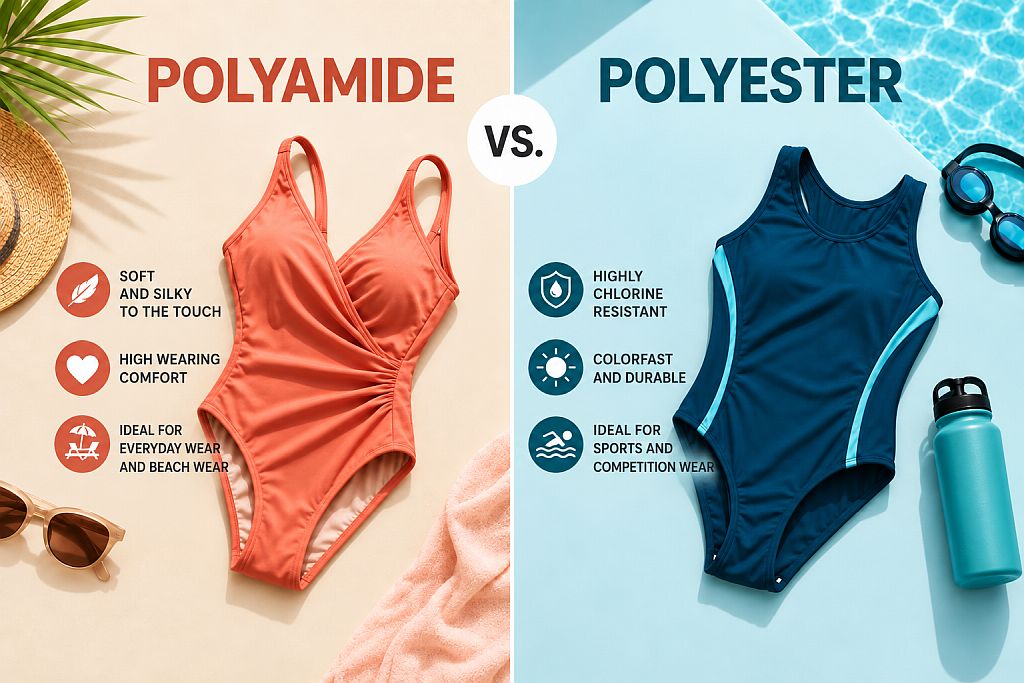
- Polyamide (nylon) stands out for its soft, silky feel and high level of comfort. It feels pleasant against the skin and is an excellent choice for everyday swimwear and swim-inspired loungewear. The downside is that polyamide can lose its elasticity more quickly than polyester when exposed to chlorine on a regular basis.
- Polyester, on the other hand, is the more durable option. It withstands chlorine significantly better, keeps its colour for longer and works particularly well for performance and competition swimwear used regularly in swimming pools. The fabric feels somewhat firmer, which also makes polyester a practical choice for sportswear produced by a tracksuits manufacturer.
We often recommend polyamide-elastane blends for lifestyle and beach collections, while polyester-elastane works well for sports and club swimwear. For mixed collections, it can make sense to combine both materials depending on the individual product line.
Sustainable fabrics for swimwear
Sustainability is no longer just a trend in the swimwear industry. It has become an established expectation among both end customers and retail partners and is now one of the key swimwear trends shaping new collections. This is why recycled materials such as Econyl are becoming increasingly important.
Manufacturers make Econyl from regenerated materials such as discarded fishing nets, textile waste and industrial plastics. It offers the same technical properties as conventional polyamide, but with a significantly lower environmental impact. Swimwear manufacturers also increasingly use recycled polyester (rPET) made from PET bottles.
For brands that want to position themselves as sustainable, these materials offer clear added value. Brands can market these materials as more sustainable solutions, use their environmental certifications to support their claims and achieve quality comparable to conventional fabrics. Although they usually cost more, their added value can often justify the higher price and strengthen the brand’s positioning.
Lining fabric for swimsuits: why it is essential
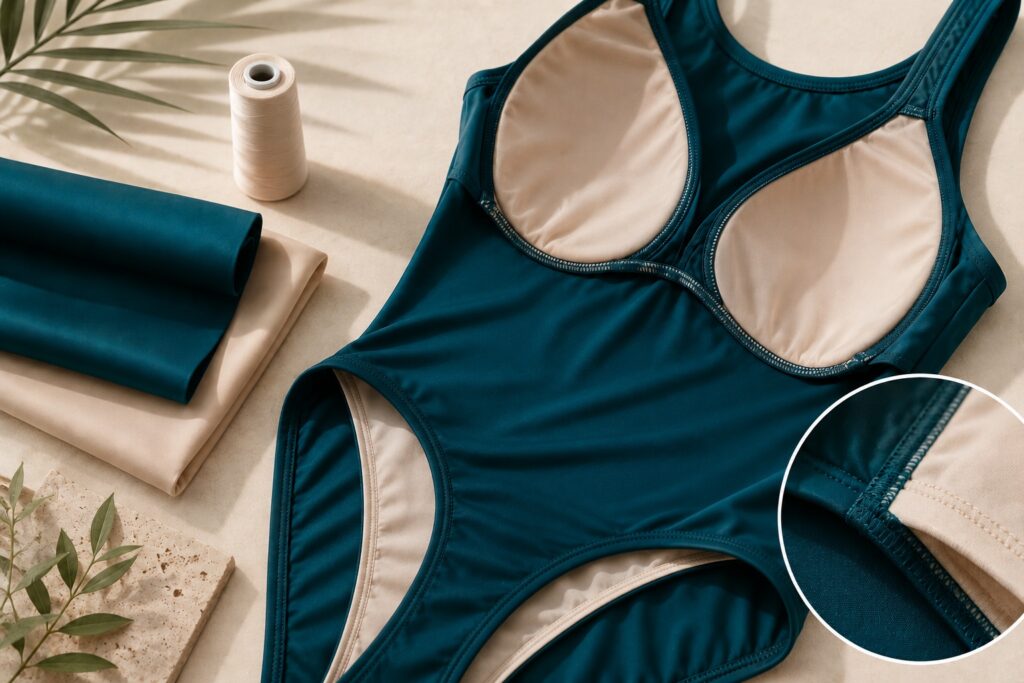
When choosing a fabric for swimwear, the lining is often overlooked – and wrongly so. A good lining fabric helps keep the swimsuit opaque when wet, supports its shape and feels comfortable against the skin.
A quality swimsuit lining should be lightweight, quick-drying and elastic so that it follows the movement of the outer fabric without restricting the wearer. Especially around the bust and leg openings, a high-quality lining is essential for comfort and a good fit. Cutting corners here can quickly lead to customer complaints, for example due to transparency, shifting fabric or premature wear.
Which fabric is suitable for different types of swimwear?
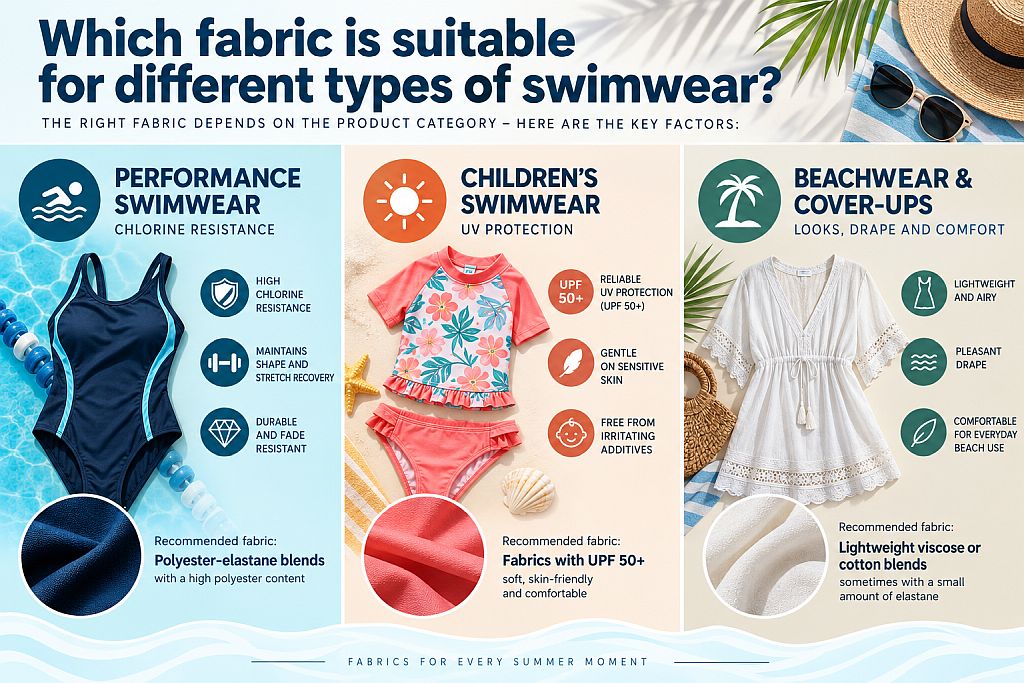
The requirements for the right fabric for a swimsuit vary considerably depending on the product category.
Performance swimwear (chlorine resistance)
For performance swimwear, chlorine resistance is a top priority. Polyester-elastane blends with a high polyester content are a suitable choice because they can withstand regular exposure to chlorine without fading or losing their stretch recovery. A firmer fabric feel is also important, as it helps keep the material in place during intensive movement.
Children’s swimwear (UV protection)
For children’s swimwear, UV protection is particularly important. Fabrics with a UPF (Ultraviolet Protection Factor) of 50+ provide reliable protection from the sun and are now common in high-quality children’s swimwear. At the same time, the fabric should be gentle on the skin and free from irritating additives, as children’s skin can be particularly sensitive.
Beachwear & cover-ups
For beachwear and cover-ups, technical properties become somewhat less important. Appearance, drape and comfort take centre stage. Lightweight viscose or cotton blends, sometimes with a small amount of elastane, work well for loose-fitting styles, while water-repellent treated fabrics can provide additional benefits for everyday use at the beach.
What should you consider when buying swimwear fabric?
The choice of fabric affects quality, costs and, ultimately, customer satisfaction. The following points should be considered when sourcing materials:
- Fabric weight: For swimsuits, a fabric weight of around 190–240 g/m² is generally recommended. Materials that are too lightweight can become see-through, while heavier fabrics may restrict movement.
- Elastane content: 15–25% elastane is a useful guideline for achieving a good balance between stretch and shape retention.
Certifications: OEKO-TEX or similar certifications can help build trust, particularly in the European market. - Minimum order quantities (MOQ): These can vary significantly between suppliers and should be considered early in relation to the size of the collection.
- Fabric samples: Before starting series production, the material should always be tested on a prototype, including washing and chlorine resistance tests.
Good coordination between fabric selection and the production partner can save considerable time at this stage and help prevent costly rework.
Caring for swimsuit fabrics
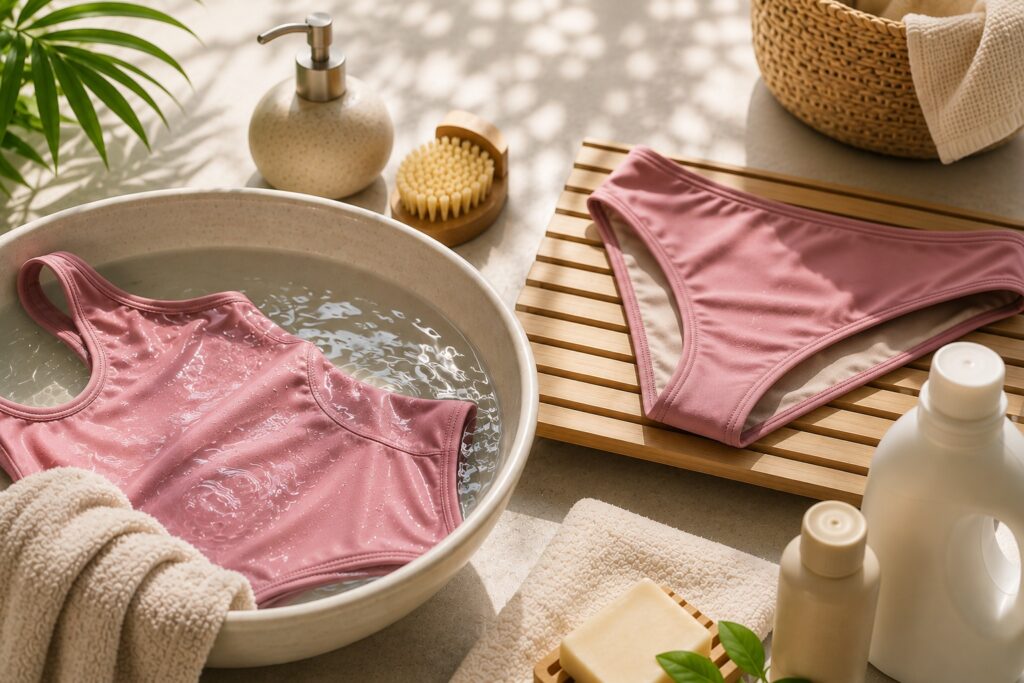
Even the best fabric can lose its quality if it is not cared for properly. This is an important point to include in care instructions and customer communication. After each use, the swimsuit should be rinsed with clean, cold water to remove chlorine or salt water residue. Detergents containing fabric softener or bleach should be avoided, as they can damage the elastane fibres.
For drying, it is best to lay the swimsuit flat in the shade. Direct sunlight and tumble drying can damage both the colour and the fabric’s elasticity. Passing these care recommendations on to customers not only helps extend the life of the product but can also significantly reduce the number of complaints.
Choosing the right fabric for swimsuit collections is a technical decision that directly affects quality, durability and how a brand is perceived. Whether you choose polyamide or polyester, a standard material or a more sustainable alternative such as Econyl, the key is always to match the fabric to the product category and target audience. This is where we can support you: As an experienced production partner, we advise you on fabric selection, arrange fabric samples and support your swimwear collection from the initial idea through to finished series production. Get in touch with us – together, we can find the right fabric for your next collection.
FAQ – frequently asked questions about fabric for bathing suits
For a one-piece swimsuit in a standard size, you will usually need around 0.5 to 0.8 metres of fabric, depending on the cut and fabric width. More elaborate designs with ruffles, cut-outs or a wrap style may require more material. When calculating the requirements for an entire collection, it is worth working out the fabric consumption for each style individually, as even small changes to the pattern can noticeably affect the amount of material needed.
In most cases, this is caused by fabric that is too lightweight rather than necessarily by poor material quality. Chlorine and UV exposure can also affect the fibres and gradually reduce the fabric’s opacity. To prevent this, it is important to check the fabric weight already during the sampling stage.
It is generally not recommended. Conventional stretch fabrics used in clothing production are usually neither chlorine-resistant nor quick-drying and can quickly lose their shape when exposed to water. Swimwear requires specially developed fabrics with the appropriate fibre composition and performance properties. The two types of fabric may look similar at first glance, but the difference quickly becomes apparent during use.
Elastane designed for swimwear is specially treated to improve chlorine resistance, while standard elastane used in the clothing industry can lose its elasticity more quickly with regular exposure to chlorine. These chlorine-resistant variants, including products marketed under brand names such as Xtra Life LYCRA®, are particularly relevant for performance swimwear and club collections where garments are frequently used in swimming pools.
A simple test is to stretch the fabric crosswise and diagonally and observe how quickly it returns to its original shape. Good swimwear fabric springs back quickly, while lower-quality material may remain visibly stretched. It is also worth carrying out a wet test to check opacity and asking the supplier for the fabric weight before placing a larger order.
The price can depend significantly on the material’s origin, certification and actual fibre quality – differences that are not necessarily visible at first glance. Certified or recycled materials such as Econyl generally cost more, but they can offer consistent quality and documented sustainability credentials. A much cheaper fabric, on the other hand, may involve compromises in chlorine resistance or shape retention that only become apparent after repeated use.