
Lace fabric – types, properties, uses and sewing tips
Lace fabric immediately stands out with its open, decorative structure. Depending on the type, it can be delicate and almost transparent, more densely constructed, or particularly soft and body-hugging thanks to elastic fibers. These differences determine what a particular type of lace is suitable for – from blouses and dresses to underwear and lingerie, as well as bridal wear.
When working with lace, the pattern is not the only factor to consider. Sewing also requires attention to elasticity, transparency, edges and the stability of the material. Choosing lace fabric carefully therefore makes it possible not only to create visually appealing garments, but also to achieve a finish that suits the cut and intended use.
What is lace fabric?
Lace fabric is a textile material with an open, usually decorative structure. Manufacturers create lace’s characteristic patterns using different techniques, such as weaving, knitting, embroidery or connecting individual threads. There is therefore no single type of lace fabric: depending on the manufacturing method, fibers and construction, lace can differ considerably in transparency, strength, elasticity and feel.
Traditionally, artisans made lace by hand using elaborate techniques, whereas manufacturers now produce most modern lace fabrics by machine. Common materials include cotton, polyester, polyamide and blends containing elastane. For close-fitting garments in particular, the fiber composition plays an important role because it determines how soft, stretchy and shape-retaining the lace will be.
The edges are also part of the characteristic appearance of many lace fabrics. Designers can deliberately incorporate a decorative edge into the design, for example along a hem, neckline or the edges of lingerie. With other types, you can cut the fabric freely and finish the edges with a suitable seam or binding.
What types of lace fabric are available?
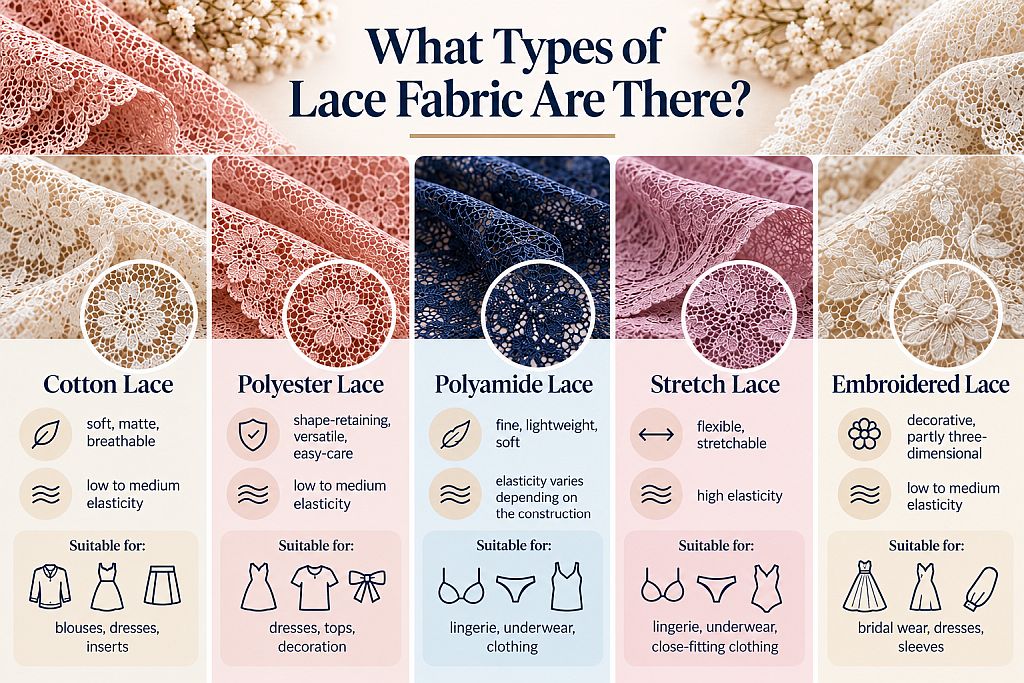
When choosing lace fabric, it is worth looking at the fiber composition because it directly affects how the material behaves when worn and sewn. For example, firm cotton lace feels very different from elastic polyamide and elastane lace. The appearance and transparency can also vary significantly within the same material group.
| Lace fabric | Typical properties | Elasticity | Suitable for |
|---|---|---|---|
| Cotton lace | soft, matte, breathable | low to medium | blouses, dresses, inserts |
| Polyester lace | shape-retaining, versatile, easy-care | low to medium | dresses, tops, decoration |
| Polyamide lace | fine, lightweight, soft | depending on the type | underwear, lingerie, clothing |
| Elastic lace | body-hugging, stretchy | high | underwear, lingerie, close-fitting garments |
| Embroidered lace | decorative, sometimes three-dimensional | low to medium | bridal wear, dresses, sleeves |
Cotton lace
Cotton lace has a natural, matte appearance and feels pleasant against the skin. It works particularly well for garments that require a soft feel and a certain degree of breathability. Depending on its construction, cotton lace can also be relatively firm, making it suitable for decorative inserts, blouses, dresses or details on tops. Its soft feel also makes cotton lace suitable for bra manufacturing, particularly for decorative panels and details that come into direct contact with the skin.
Polyester and polyamide lace
Fashion brands widely use synthetic lace fabrics because manufacturers can specifically adjust their properties during production. Polyester, for example, helps the fabric retain its shape, while polyamide can create a finer and softer feel. Designers can use these types for a wide range of garments, from very delicate pieces to considerably denser styles, depending on the fabric construction.
Elastic lace
Elastic lace usually contains elastane or another stretch component, allowing it to adapt more closely to the body. This makes it particularly suitable for close-fitting designs, underwear, lingerie and inserts where freedom of movement is important. When sewing, however, keep in mind that tension can change the material’s shape, so handle it more gently than firm lace.
Embroidered lace
Embroidered lace combines a base material with additional embroidery or decorative thread elements. This creates more pronounced patterns and sometimes three-dimensional structures that are particularly effective in formal clothing. Designers often use these lace fabrics for dresses, tops, sleeves or decorative sections where the pattern itself plays an important role in the overall appearance.
What are the properties of lace fabric?
Lace fabric can vary considerably depending on the fiber, manufacturing method and pattern. Fine lace can be lightweight and transparent, while a more densely constructed type may be considerably more stable and less see-through. Elasticity can also range from almost no stretch to highly elastic qualities containing elastane.
Typical properties include:
- Open structure: The spaces within the material create the characteristic pattern and largely determine its transparency.
- Transparency: Depending on the density and pattern, lace can be barely transparent or highly see-through.
- Elasticity: This mainly depends on the material composition and the proportion of elastic fibers.
- Lightweight feel: Many lace fabrics are relatively lightweight, although denser or embroidered versions can be heavier.
- Decorative appearance: Patterns, edges and embroidery make lace a highly decorative material.
- Delicate structure: Friction, sharp edges or improper handling can damage fine lace.
- Different textures: Cotton, polyamide, polyester and blended fabrics each have a different feel and can affect wearing comfort.
How is lace fabric used?
Designers use lace for more than just decorative overlays. Depending on its strength, transparency and elasticity, lace can form part of a garment or enhance specific sections.The differences are particularly noticeable in everyday clothing, underwear and formal wear.

Lace fabric for clothing
Designers often use lace for complete pattern pieces or selected inserts in blouses, dresses, skirts and tops. A denser type can serve as the main outer fabric, while transparent lace usually works best with a lining or a second layer of fabric. Designers can also use lace for sleeves, shoulder sections and necklines without making the entire garment from this material.
Lace fabric for underwear and lingerie
Designers often use elastic lace for underwear and lingerie. It adapts to the body and works well with jersey, microfiber or elastic bands. For an erotic lingerie manufacturer, material selection is just as important as appearance: the lace should feel comfortable against the skin, provide sufficient flexibility and avoid unnecessary tension in areas subject to greater stress.
Lace for bridal wear
In bridal fashion, designers often use lace selectively to highlight specific areas of a garment. They can use it on necklines, sleeves or backs, or apply it as a decorative layer over a simpler base fabric. In bridal underwear manufacturing, lace also works well for delicate details and decorative elements. For wedding dresses, designers should choose patterns that align neatly with the pattern pieces. When they cover larger areas, they should also check whether the lace transparency and pattern work well with the chosen lining or underlayer. If you are planning the complete bridal look, read our guide What to wear under a wedding dress? for practical tips on choosing suitable bridal underwear.
Lace for accessories and details
Small amounts of lace fabric can be enough to give a garment a distinctive accent. Designers can use lace for collars, cuffs, pockets, hair accessories and decorative inserts. They can also incorporate an existing lace edge into these details, which eliminates the need for additional finishing.
Lace fabric for sewing – what should you consider?
When sewing lace fabric, a precise cut and careful handling of the delicate structure are particularly important. Key points include:
- Check the elasticity: With elastic lace, the pattern must be suitable for the stretch of the material.
- Align the pattern: With floral or regular motifs, the pattern should continue as harmoniously as possible across seams and transitions.
- Secure the fabric when cutting: Lace can shift easily. A flat work surface and precise cutting help maintain its shape.
- Use a suitable needle: A fine needle is generally suitable for delicate lace fabrics. Test the needle and stitch on a fabric scrap before sewing.
- Adapt the seam to the material: With elastic lace, the seam should not unnecessarily restrict the fabric’s ability to stretch.
- Use the lace edge deliberately: You can use a decorative edge directly as a hem or finish, eliminating the need for additional binding.
- Finish raw edges carefully: If there is no decorative edge, depending on the fabric, a narrow seam, binding or elastic band may be suitable.
How should you care for lace fabric?
The appropriate care for lace fabric depends on its fiber composition and construction. Fine or elastic lace is generally more sensitive to heat and friction than denser types.
The main recommendations are:
| Care area | Recommendation |
|---|---|
| Washing | Use a delicate cycle or hand wash at a low temperature |
| Detergent | Use a mild detergent and avoid bleach |
| Friction | Do not rub heavily or wring out |
| Drying | Do not tumble dry at high heat; lay delicate lace flat to dry |
| Ironing | Iron at a low temperature suitable for the fiber |
| Care label | Always follow the manufacturer’s care instructions |
Very fine or heavily embroidered lace may require particularly gentle cleaning. You should therefore always check the specific fiber composition and follow the care label.
What should you consider when buying lace fabric?
Not every type of lace is suitable for every pattern or purpose. In addition to color and pattern, you should carefully consider the material properties. Pay particular attention to elasticity, transparency, fabric width and the type of lace edge. The pattern repeat also matters when you cut larger areas and need to align the design across seams or pattern pieces.
| Criterion | What should you consider? |
|---|---|
| Elasticity | Does the amount of stretch suit the pattern and the desired wearing comfort? |
| Transparency | Is a lining or opaque underlayer required? |
| Pattern | Do the size and direction of the pattern suit the planned garment? |
| Fabric width | Is the fabric wide enough for the required pattern pieces? |
| Lace edge | Can the decorative edge be used as a hem or finish? |
| Handle and drape | Does the fabric feel comfortable and does its drape suit the garment? |
| Fiber composition | Is the fiber composition suitable in terms of comfort, care and sewing? |
For larger projects, it can be useful to check a fabric sample before cutting. This makes it easier to assess how transparent the lace actually is, how it drapes and whether the pattern, color and elasticity suit the planned garment.
Conclusion
Lace fabric is available in many different qualities and can have very different properties depending on its material and construction. Cotton lace, synthetic lace, elastic varieties and embroidered qualities are therefore not automatically suitable for the same applications. The most important factors when choosing lace are elasticity, transparency, pattern, fabric width and the intended method of construction.
Whether you use lace for clothing, underwear, erotic lingerie or bridal wear, choose a type that suits the pattern and its intended purpose. When sewing, precise cutting, the right needle and a construction method that accounts for the material’s structure and, where applicable, elasticity will help you achieve a clean result. You should also adapt the care routine to the specific fiber composition.
FAQ about lace fabric
Lace fabric is a textile material with a characteristic open and usually decorative structure. Depending on how it is made and the materials used, lace can be transparent, elastic, firm, soft or constructed with varying degrees of density.
No. Elasticity depends on the material composition and construction of the fabric. Lace containing elastane is considerably more stretchy than firm cotton or polyester lace without elastic fibers.
Elastic lace is often used for underwear and lingerie because it adapts better to the body. A comfortable feel, sufficient freedom of movement and a construction that does not place unnecessary tension on the material are particularly important.
Bridal designers use embroidered and decoratively patterned lace fabrics for a range of applications. The most suitable type depends on whether they use the lace as a complete fabric layer, for sleeves, necklines, back sections or individual appliqués.
Yes, you can sew many lace fabrics with a regular sewing machine. With fine or elastic varieties, adjust the needle, stitch type and thread tension to the material, and test them on a fabric scrap before sewing.
Not necessarily. With transparent lace, however, a lining or underlayer may be necessary if certain areas of the body need to be covered. The decision depends on the pattern, transparency and desired design.
Cut lace fabric on a flat surface and avoid stretching the material unnecessarily. With prominent patterns, align the pattern carefully so that it flows harmoniously across the pattern pieces and seams.
Care depends on the fiber composition and the manufacturer’s care instructions. Delicate lace should generally be washed gently, not rubbed or wrung out heavily, and should not be exposed to unnecessarily high temperatures.
Tulle generally has a regular, net-like structure and is often used as a lightweight and transparent base fabric. Lace is more strongly defined by decorative patterns, ornaments or elaborately designed edges. However, the two materials can also be combined.