
Polyester fabric – properties, use and processing in clothing production
Polyester is the most widely produced fibre in the world – hardly any other material appears in so many different garments. From sportswear and swimwear to workwear: polyester fabric has established itself in virtually every area of clothing production thanks to its versatility, robustness and easy-care properties. In this article we explain exactly what polyester is, what properties distinguish the fibre, which types of polyester exist and which product categories the material is best suited for.
What is polyester and what is the fibre made from?
Polyester is a synthetic fibre that chemically consists of polyethylene terephthalate (PET) – the same plastic used for PET bottles. The fibre is produced through a chemical polymerisation process in which petroleum derivatives are joined into long molecular chains. The polymer is then melted and spun into continuous threads through fine nozzles.
Unlike natural fibres such as cotton, whose properties depend on cultivation, climate and harvesting conditions, polyester fabric can be produced industrially with very consistent quality. This controllability in the production process is one of the reasons why the fibre is so attractive for industrial clothing production: manufacturers can specifically influence yarn thickness, fibre cross-section and surface structure in order to optimise the fabric for different applications.
What properties distinguish polyester fabric?
Polyester stands out above all for its high tear resistance and shape stability. The fibre retains its original shape even after intensive use and frequent washing, without stretching or deforming – a clear advantage over many natural fibres.
Further characteristic properties of polyester fabric are:
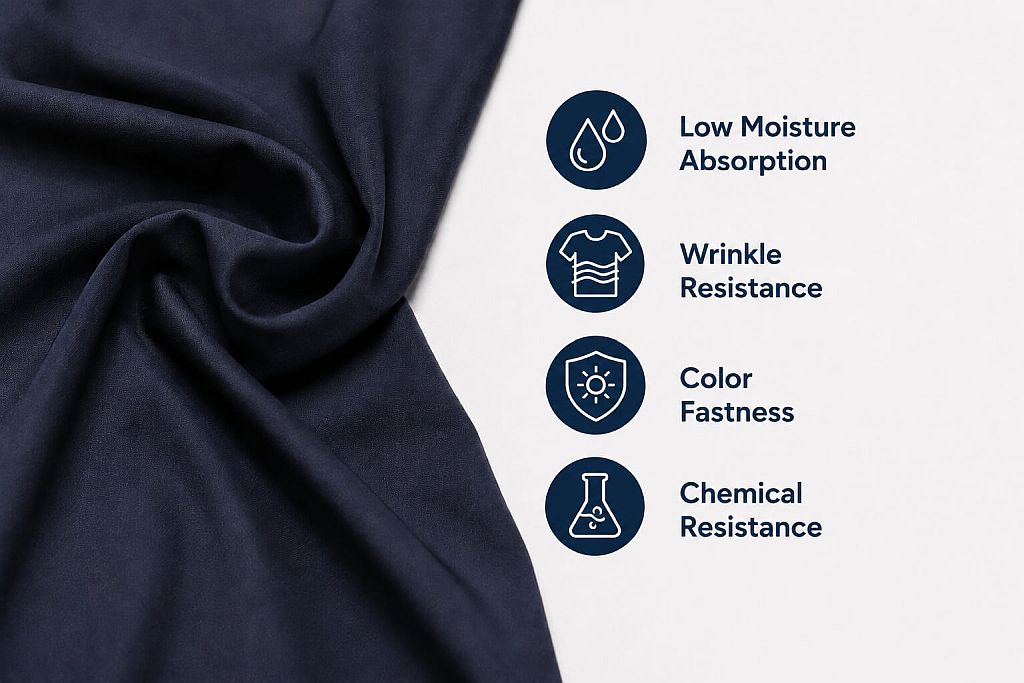
- Low moisture absorption: Polyester absorbs almost no moisture, which means the material dries very quickly and is well suited for moisture-wicking functional clothing.
- Crease resistance: Garments made from polyester remain largely smooth even after washing, which reduces care requirements.
- Colour fastness: The fibre takes dyes well and retains its colour intensity even after many wash cycles and UV exposure.
- Chemical resistance: Polyester is resistant to most chemicals, making the material particularly suitable for sportswear and swimwear, where contact with chlorinated or salt water is common.
This combination of robustness and easy-care properties makes polyester one of the most reliable fibres for products that must withstand consistently high demands.
An overview of polyester types
Not every polyester fabric is identically constructed – depending on the manufacturing process and fibre type, feel, area of application and properties differ.
Microfibre polyester
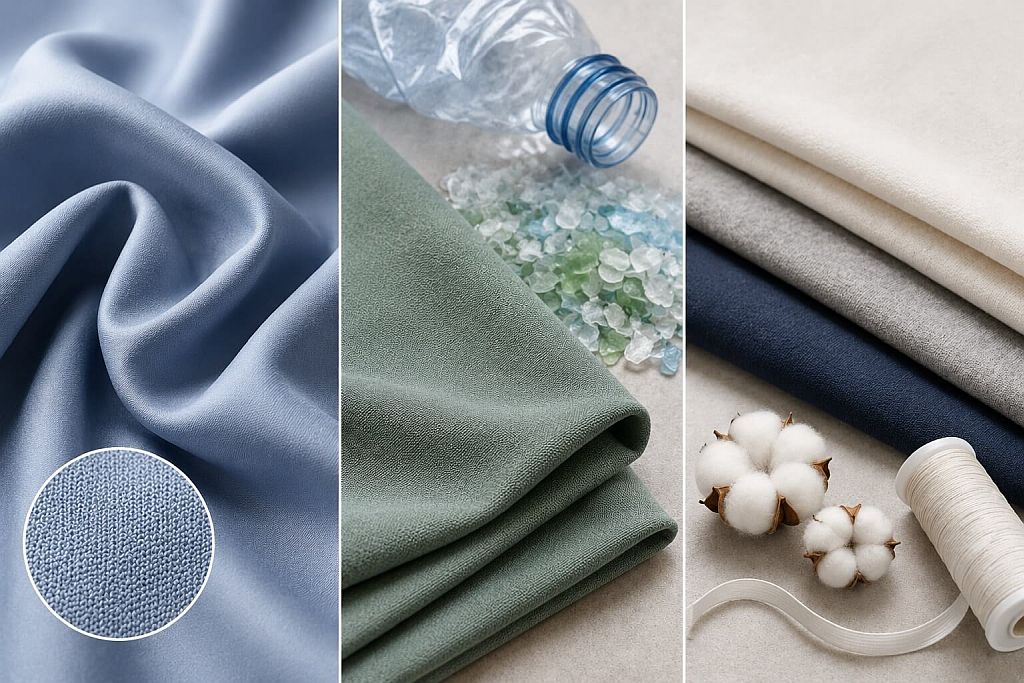
Microfibre polyester consists of extremely fine fibres that are thinner than a human hair. This fineness produces a particularly soft, almost silky feel as well as a high fabric density. Microfibre polyester is frequently used for high-quality functional clothing as well as for fabrics with a particularly smooth drape.
Recycled polyester (rPET)
Recycled polyester is obtained from used PET bottles or other plastic waste, which is melted down and spun into new fibres. The result has the same technical properties as conventional polyester, but requires less crude oil and energy to produce. For brands wishing to integrate recycled materials into their collections, rPET has now become an established and widely available option.
Polyester blended fabrics (with cotton, elastane)
In practice, polyester is frequently combined with other fibres in order to achieve specific additional properties. A blend with cotton improves wearing comfort and breathability, while the addition of elastane increases stretchiness – a principle applied in particular to sportswear and swimwear. Depending on the blend ratio, fabrics can be developed that are precisely tailored to the respective intended use.
Polyester compared to other materials
To better assess the strengths of polyester fabric, a direct comparison with other commonly used materials is worthwhile:
| Material | Moisture management | Shape stability | Care requirements | Typical use |
|---|---|---|---|---|
| Polyester | Wicks moisture, dries quickly | Very high | Low, crease-resistant | Sportswear, functional clothing and swimwear |
| Cotton | Absorbs and retains moisture | Medium to low | Medium, can shrink | Underwear, everyday clothing |
| Polyamide | Wicks moisture, soft feel | High | Low | Swimwear, hosiery |
Compared to cotton fabric, which scores above all for breathability and skin-friendliness, polyester’s strength lies in its technical performance: quick-drying, shape-stable and resistant to external influences. Where additional stretchiness is needed, polyester can be combined with spandex – we have described the fundamentals of this elastic fibre in detail in our separate article on spandex.
Which garments is polyester fabric best suited for?
Depending on the product category, different strengths of polyester fabric come into play.
Sportswear and functional clothing
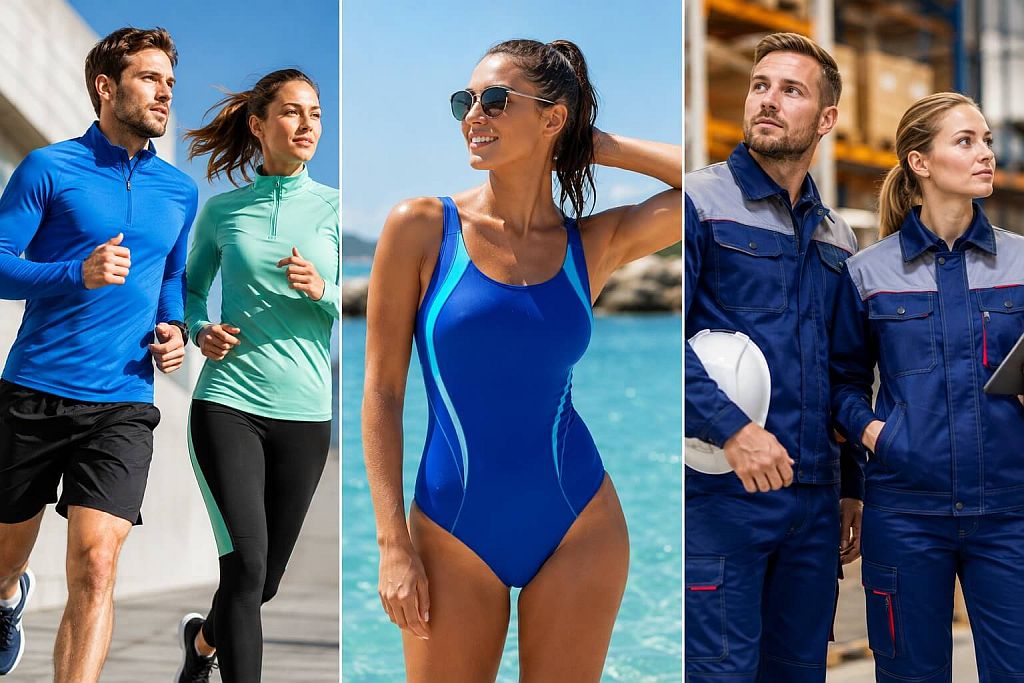
For sportswear and functional clothing, polyester has become almost indispensable due to its moisture-wicking properties. The fabric transports sweat away from the skin to the outside, where it can evaporate quickly – a decisive advantage over natural fibres, which store moisture. In combination with elastane, fabrics are produced that adapt to movement without losing shape stability. Sportswear manufacturing therefore often relies on polyester blends when durability, flexibility and reliable moisture management are required.
Swimwear
In swimwear, polyester is valued for its high resistance to chlorine and salt water. Unlike other fibres, polyester loses almost none of its colour intensity or elasticity even with regular contact with swimming pool water, which is why the fabric is particularly frequently used for sports swimwear and competition clothing. Swimwear production therefore often uses polyester when durability, colour retention and resistance to repeated exposure to water are important.
Workwear and uniforms
For workwear and uniforms, robustness and easy care are decisive. Polyester blended fabrics, frequently combined with cotton, offer the right balance here: hard-wearing, crease-resistant and yet comfortable enough for all-day use. Uniform sewing can also incorporate functional finishes, such as water-repellent or dirt-repellent coatings, when additional protection is required.
Sustainability in polyester – what brands should know
Sustainability plays an increasingly important role in the choice of polyester fabric for both brands and end customers alike
With recycled polyester (rPET), a widely available alternative is now on the market, obtained from recycled plastics and offering the same technical properties as conventional polyester. The use of rPET can be communicated credibly and is now actively requested by many trading partners.
Those who wish to explore sustainable material options and the relevant certifications in more detail will find a comprehensive overview in our article on sustainable fabrics.
What should one pay attention to when purchasing polyester fabric?
When sourcing polyester fabric for series production, several technical criteria should be taken into account in order to ensure the desired product quality:
- Grammage: The weight per square metre should match the planned area of application – lightweight functional clothing requires a different weight than robust workwear.
- Fibre type: Microfibre polyester offers a finer feel, while standard polyester is usually more cost-effective and equally durable.
- Blend ratio: With blended fabrics, the polyester content largely determines the shape stability and easy-care properties of the finished fabric.
- Processing quality: Consistent weave density and clean thread processing directly affect the durability and appearance of the finished product.
- Certifications: Those who value sustainable and verified materials should look for recognised labels – our article on textile certifications provides a detailed overview.
A sample test before series production additionally helps to realistically assess the actual wearing and care behaviour of the chosen polyester fabric.
Care instructions for clothing made from polyester
Polyester is one of the easiest-care materials in clothing production, which significantly reduces care requirements for end customers. When washing, a low to medium temperature of 30 to 40 degrees Celsius is generally sufficient, as polyester rarely shrinks and reliably retains its shape and colour.
For drying, both air drying and tumble drying at a low temperature setting are suitable, although air drying is generally gentler on the fibres and extends the lifespan of the garment. Since polyester can tend towards slight pilling – particularly with mechanical friction in everyday use – turning garments inside out before washing is recommended, as is avoiding aggressive detergents.
Care should be taken when ironing: polyester is sensitive to high temperatures and can melt or develop shiny patches if the iron is too hot. A low ironing temperature or ironing through a pressing cloth reliably protects the fibre.
Polyester fabric has established itself as one of the most versatile fibres in clothing production thanks to its robustness, shape stability and easy-care properties. Whether as a functional material for sportswear, chlorine-resistant fabric for swimwear or hard-wearing blended fabric for workwear – the right polyester variant can be specifically tailored to almost any intended use.
Conclusion: using polyester fabric effectively in clothing production
Polyester fabric is particularly well suited to applications where durability, shape retention and easy care are important. Depending on the fibre type, processing method and blend ratio, the material can be used for sportswear and functional clothing, swimwear, workwear and many other product categories. For series production, the choice is therefore not only about selecting polyester, but also about choosing a quality that meets the specific requirements of the garment.
FAQ – Frequently asked questions about polyester fabric
This is due to the synthetic manufacturing process of the fibre, during which small residues of processing agents can remain in the fabric. A first wash before wearing generally removes these residues completely and eliminates the smell.
This depends on the weave density and fibre structure, not the material itself. Densely woven polyester fabric allows less air to circulate, while more open structures or special functional finishes can significantly improve breathability.
Yes, polyester-cotton blended fabrics are among the most widely used materials of all. They combine the shape stability and easy-care properties of polyester with the breathability and skin-friendliness of cotton – a compromise that has proven particularly effective for workwear.
This depends above all on the fibre fineness and weave. Microfibre polyester tends to pill less due to the particularly fine fibres compared to coarser standard qualities, while mechanical friction in everyday use – such as from rucksack straps or tight seating surfaces – additionally increases the risk with any polyester fabric.
Yes, rPET goes through the same spinning process as conventional polyester and therefore has identical technical properties. The difference lies exclusively in the raw material source, not in the quality or durability of the finished fabric.