Synthetic fibers – properties, applications, and their central role in modern apparel production
Synthetic fibers have fundamentally changed the modern textile industry. They make it possible to produce fabrics tailored precisely to the requirements of a wide range of applications — from sports and performance wear to everyday fashion and work uniforms. Thanks to controlled chemical processes, their properties can be fine-tuned with precision, resulting in materials that are lightweight, durable, dimensionally stable, and easy to care for. At the same time, synthetic fibers continue to evolve: innovative manufacturing methods, sustainable alternatives, and new functional fibers are making them more versatile than ever. This guide explains what defines synthetic fibers, how they are produced, what they are used for, and the role they play in modern apparel production.
What is a synthetic fiber? Classification and basic types
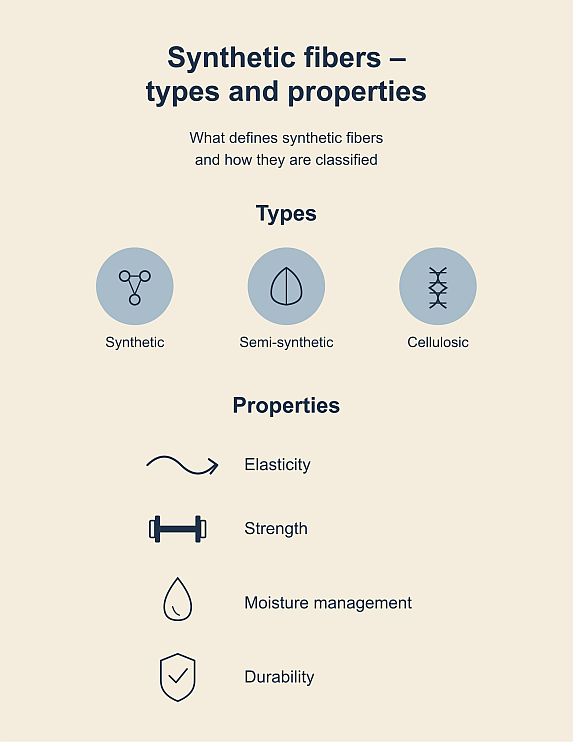
Synthetic fibers are textile fibers produced through chemical processes. Their starting material can be either natural raw substances or fully synthetic compounds. Unlike natural fibers such as cotton or wool, synthetic fibers are created in a controlled production process that allows their properties — such as elasticity, durability, absorbency, or sheen — to be specifically engineered. In principle, synthetic fibers are divided into two main categories.
Synthetic Fibers (Polyester, Polyamide, Elastane)
Fully synthetic fibers are derived entirely from petrochemical raw materials such as crude oil or natural gas. Through polymerization, long, stable molecular chains are formed, which are then spun into filaments.
Key properties of synthetic fibers:
- High durability – highly resistant to abrasion and mechanical stress.
- Low moisture absorption – materials like polyester or polyamide dry quickly and don’t cling to the body.
- Dimensional stability – retain their appearance even after many washes.
- Elasticity – especially in elastane, which provides optimal freedom of movement.
- Resistance to UV radiation, chlorine, and sweat – ideal for sewing sportswear and swimwear.
Typical applications: sportswear, swimsuits, performance wear, workwear, elastic inserts.
Regenerated cellulosic fibers (Viscose, Lyocell, Modal)
Regenerated fibers are based on natural raw materials (mostly cellulose), but are processed chemically and then formed into fibers.
Key properties of regenerated cellulosic fibers:
- Soft and pleasant on the skin – ideal for sewing underwear, T-shirts, and lightweight clothing.
- High breathability – better breathability than many synthetic fibers.
- Good moisture management – viscose and modal absorb moisture well.
- Natural feel – similar to cotton or silk to the touch.
- Elegant drape – lyocell in particular falls beautifully on the body.
Typical applications: everyday fashion, underwear, blouse fabrics, premium basics, lightweight summer clothing.
Overview of synthetic fiber types and their properties
| Faser | Eigenschaften | Typische Anwendungen |
|---|---|---|
| Polyester | Strapazierfähig, schnelltrocknend, pflegeleicht | Sportbekleidung, Outdoorbekleidung, Arbeitskleidung |
| Polyamid | Elastisch, abriebfest, leicht | Funktionsbekleidung, Unterwäsche |
| Elastan | Sehr dehnbar, formstabil | Sportbekleidung, Jeans, Alltagskleidung |
| Viskose | Weich, atmungsaktiv | Blusen, T-Shirts, leichte Kleidung |
| Lyocell | Eleganter Fall, feuchtigkeitsregulierend | Premium-Basics, Sommermode |
| Modal | Weich, bequem, atmungsaktiv | Unterwäsche, Basics |
Manufacturing of modern synthetic fibers
Today, the production of synthetic fibers takes place in a controlled, multi-stage process in which raw materials are first chemically prepared and then spun into fine filaments. Through precise control of polymerization, spinning techniques, and finishing, properties such as elasticity, strength, or moisture management can be defined with great accuracy. The result is highly functional fibers whose performance can go well beyond that of traditional natural fibers.
Synthetic fibers vs. natural fibers – a practical comparison
Synthetic and natural fibers differ above all in their origin, structure, and functional properties. Natural fibers such as cotton, linen, or wool are obtained directly from plants or animal sources and naturally offer high breathability, a pleasant feel against the skin, and good temperature regulation. They are considered more environmentally friendly, but are generally more care-intensive and less durable.
Synthetic fibers like polyester, polyamide, or elastane are produced industrially and can be specifically tailored to meet particular requirements — for example, higher tensile strength, elasticity, easy care, or low weight. They are used especially where functionality, durability, and good value for money are key. In modern textile production, the two fiber types are therefore increasingly combined to achieve optimal properties — such as fabrics that are robust, elastic, and comfortable all at once.
| Kategorie | Synthetische Fasern | Natürliche Fasern |
|---|---|---|
| Herkunft | Synthetisch, industriell hergestellt | Pflanzlich oder tierisch |
| Atmungsaktivität | Mittel bis gut (je nach Faser) | Sehr gut |
| Zugfestigkeit | Sehr hoch | Mittel bis hoch |
| Elastizität / Formbeständigkeit | Hoch, knitterarm | Niedrig bis mittel |
| Feuchtigkeitsaufnahme | Gering, trocknet schnell | Hoch, trocknet langsamer |
| Pflege | Sehr pflegeleicht | Pflegeintensiver |
| Hautgefühl | Glatt, kühlend | Natürlich, warm |
| Preisniveau | In der Regel günstiger | Oft teurer |
| Einsatzbereiche | Sportbekleidung, Funktionskleidung, Arbeitskleidung | Alltagskleidung, Premium-Mode, Naturtextilien |
| Umweltaspekte | Geringere Nachhaltigkeit, Mikroplastik-Problematik | Biologisch abbaubar, aber oft ressourcenintensive Produktion |
Why are natural and synthetic fibers blended?
The modern textile industry increasingly relies on blended fabrics because they combine the advantages of different fiber types. Natural fibers provide a pleasant, soft feel against the skin, while synthetic fibers add stability, shape retention, and longevity. Particularly popular combinations include cotton with elastane or wool with polyamide, as they offer an optimal balance of comfort, elasticity, and durability. The result is fabrics that are practical for everyday wear, easy to care for, and comfortable to wear at the same time.
Advantages and disadvantages of synthetic fibers
Advantages:
- Very robust and long-lasting
- Shape-retaining, low wrinkling
- Easy-care and quick-drying
- Cost-effective production
- High functionality (elasticity, thermal insulation, breathability – depending on the fiber type)
Disadvantages:
- Lower breathability than some natural fibers
- Can build up static electricity
- Partially reduced wearing comfort in hot conditions
- Microplastic issues during washing (depending on the fiber type)
Technical properties of synthetic fibers at a glance
| Eigenschaft | Beschreibung |
|---|---|
| Zugfestigkeit | Sehr hoch, ideal für stark beanspruchte Textilien. |
| Elastizität | Gute Formbeständigkeit, kaum Knitterbildung. |
| Feuchtigkeitsaufnahme | Gering, trocknet schneller als Naturfasern. |
| Pflegeleichtigkeit | Maschinenwaschbar, schmutzresistent. |
| Wärmeisolierung | Gut bis sehr gut, je nach Fasertyp (z. B. Fleece). |
| Gewicht | Leicht und angenehm zu tragen. |
The right synthetic fiber for every purpose – applications in detail
Synthetic fibers are indispensable in modern apparel production because, depending on their composition and processing, they can be specifically engineered to fulfill particular functions. Whether the goal is maximum durability, high wearing comfort, or specialized performance — there is a fitting fiber for every application.
Synthetic fibers in uniforms and workwear
Workwear and professional clothing must be extremely durable, color-fast, and easy to care for. Polyester is the most important synthetic fiber here: it offers very high abrasion resistance, low wrinkling, and excellent shape retention. Special fiber blends keep colors vibrant even after many wash cycles, and the clothing easily withstands intensive use. Uniforms, work jackets, and protective garments benefit particularly from these properties.
Synthetic fibers in underwear and basics
In underwear production, soft wearing comfort, elasticity, and moisture management are the top priorities. Polyamide creates a smooth, pleasantly soft surface and dries quickly. Elastane gives fabrics high stretchability and ensures that garments retain their fit even after frequent wear. In T-shirts, bodysuits, and everyday underwear, polyamide/elastane blends enable optimal freedom of movement and a gentle feel against the skin.
Synthetic fibers in sportswear and outdoor clothing
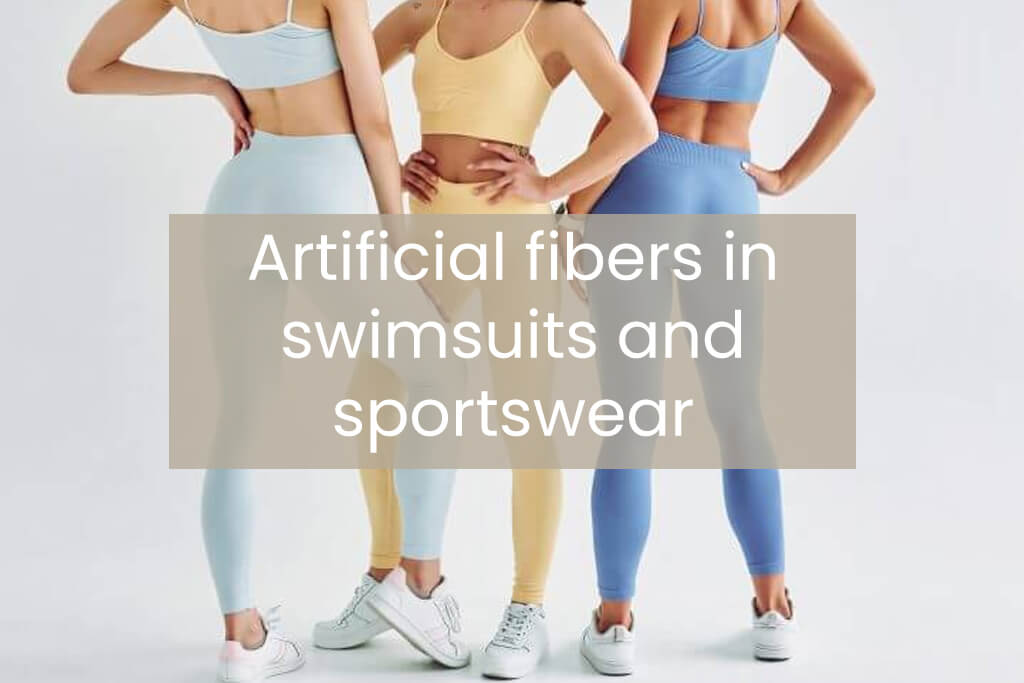
In the production of sportswear, sports and outdoor clothing must be lightweight, robust, and functional. Polyester and polyamide are therefore among the most widely used fibers. They absorb hardly any moisture, dry very quickly, and provide excellent climate management. At the same time, they are durable and pleasantly lightweight. For performance shirts, leggings, outdoor jackets, or trekking apparel, these synthetic fibers are ideal, as they optimally support freedom of movement and athletic performance.
Synthetic fibers for swimwear
For swimwear manufacturers, synthetic fibers like polyamide and elastane are indispensable. They offer high elasticity, shape retention, and resistance to chlorine and salt water. Polyamide creates a smooth, pleasantly lightweight feel, while elastane supports freedom of movement and ensures the garment fits closely to the body. Swimsuits, bikinis, and swim shorts benefit from these properties, as they guarantee comfort, an optimal fit, and quick drying during swimming and water sports.
Synthetic fibers in jeans and everyday fashion
In modern everyday fashion, and especially in jeans, manufacturers often add a small amount of elastane to ensure elasticity, shape retention, and high wearing comfort. Blended fabrics made of cotton with a small share of elastane prevent denim from stretching out, allow it to adapt better to the body, and help it maintain the desired fit for longer. In trousers, dresses, and casual tops as well, a targeted share of synthetic fibers improves both the appearance and the fit of the clothing.
Processing synthetic fibers in apparel production
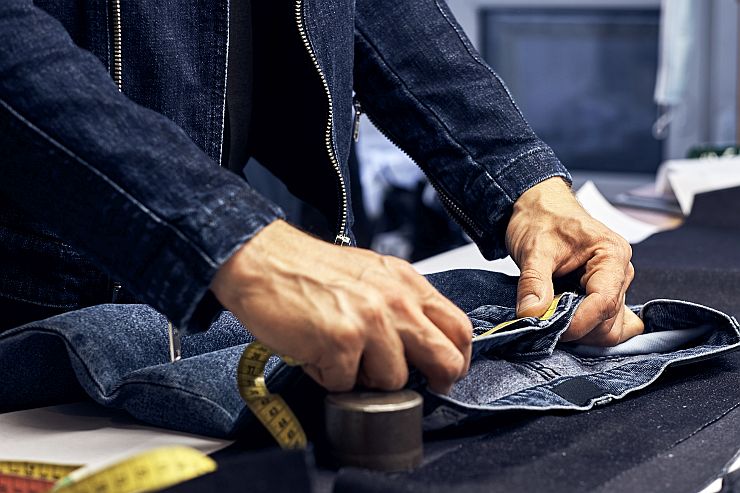
Synthetic fibers are versatile and modern, but their processing has specific requirements. In everyday production, you quickly notice it: some fabrics slip under the needle, others stretch heavily or react sensitively to heat. For garments made of polyester, polyamide, or elastane to fit perfectly and last a long time, it takes experience, the right machines, and a good feel for the material.
Challenges in sewing
Synthetic fibers behave differently from natural fibers. Typical pitfalls in practice include:
- Smooth surfaces that slip easily.
- High elasticity, which can lead to waves or distorted seams.
- Heat sensitivity, meaning ironing must be done carefully.
- Fine fabrics that fray at the cut edges.
- Stretch material that stretches under the presser foot.
With experience and the right techniques, these challenges can be mastered without difficulty.
Recommended machines, needles, and threads for synthetic fibers
| Kategorie | Empfehlung | Geeignet für |
|---|---|---|
| Maschinen | Overlockmaschinen mit elastischer Stichführung | Elastische Mischgewebe (Polyester/Elastan, Polyamid/Elastan) |
| Maschinen | Coverlockmaschinen | Stretchstoffe, Funktionsbekleidung |
| Maschinen | Flachbettmaschinen mit einstellbarem Nähfußdruck | Dünne synthetische Stoffe (Polyamid, Polyester) |
| Maschinen | Laminier- oder Bondingmaschinen | Sport- und Outdoorbekleidung aus synthetischen Fasern |
| Nadeln | Stretch-Nadeln (Jerseynadeln / Kugelspitze) | Elastische Stoffe (Elastan-Mischungen) |
| Nadeln | Microtex-Nadeln | Feine, glatte synthetische Fasern (Polyamid, Polyester) |
| Nadeln | Nadelstärke 70–90 | Je nach Stoffgewicht und Elastizität |
| Garne | Polyestergarne | Standard-Polyester- und Polyamid-Mischungen – reißfest und elastisch |
| Garne | Texturierte Overlockgarne | Elastische Nähte bei Stretchstoffen |
| Garne | Hitzebeständige Garne | Synthetische Arbeits- und Outdoorstoffe, Laminierungen |
Quality control and testing
Quality control is especially important for synthetic fibers, since these fabrics are exposed to high stress in sports, outdoor, and performance wear. Consistent inspection ensures that products remain durable, functional, and customer-friendly.
Typical tests in practice:
- Tensile and stetch test: Does the seam hold up even under high elasticity?
- Pilling test: Do knots or lint form on the surface?
- Wash tests: Are color, shape, and elasticity preserved?
- Abrasion tests: Resistance to friction and rubbing.
- Fit tests: Particularly relevant for stretch clothing and performance materials.
What influences production costs for synthetic fibers?
With synthetic fibers, production costs depend on several factors:
- Material type: polyester, polyamide, or blends have different prices.
- Fabric weight and elasticity: heavier or highly stretchable fabrics require more thread and longer production time.
- Special processing: laminating, bonding, or other functional finishes increase the effort involved.
- Machinery used: high-quality overlock and coverlock machines, as well as specialized needles and threads, affect costs.
- Quality control: extensive testing and rework raise production costs, but secure quality and customer satisfaction.
Care of modern synthetic fibers
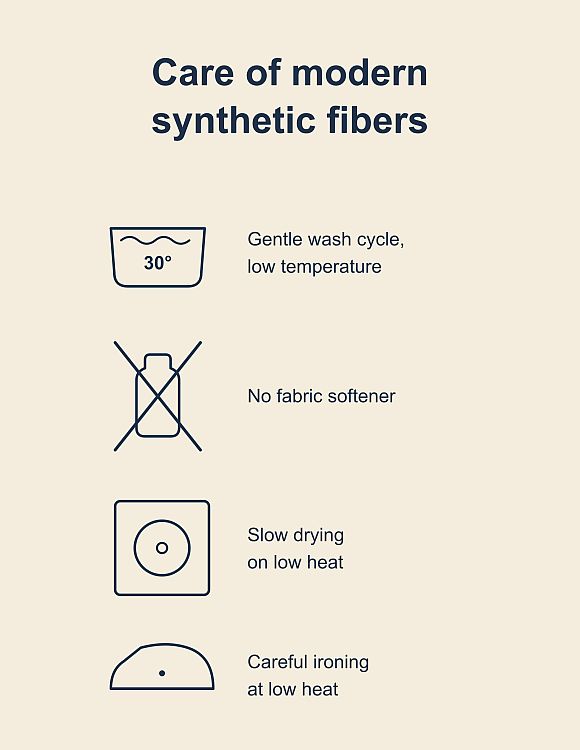
For synthetic fibers to retain their shape, elasticity, and functionality over the long term, proper care is essential. Gentle wash cycles and low temperatures prevent fibers from stretching out or hardening unnecessarily. Avoiding fabric softener protects the structure of the materials and preserves their breathability. Slow drying and careful ironing also help ensure that synthetic and semi-synthetic fabrics retain their original properties for a long time.
Sustainable synthetic fibers – how we take responsibility
Sustainability is playing an ever greater role in modern fashion production. Even with man-made fibers, there are ways to reduce environmental impact while still producing high-quality products.
Recycled polyester (rpet) and polyamide (econyl®)
- rPET: Made from recycled PET bottles. Retains the typical properties of polyester (durable, quick-drying) and reduces waste.
- ECONYL®: Regenerated polyamide from fishing nets and industrial waste. Like standard polyamide, but significantly more environmentally friendly.
- Applications: High-quality sports, outdoor, and premium fashion, where sustainability and functionality are equally important.
Benefits for the environment and the brand:
- Reduction of plastic waste and CO₂ emissions
- Use in certified, sustainable fashion
- Positive image among environmentally conscious customers
Processing man-made fibers from sustainable sources
Even with recycled materials, the same quality and processing criteria apply as with standard fibers:
- Precise machine settings for smooth seams
- Use of suitable needles and threads
- Intensive quality control to ensure shape, elasticity, and functionality
This way, sustainable products are created that are high-quality and long-lasting, without compromising on functionality or comfort.
Next-generation functional fibers
The textile industry is increasingly turning to intelligent fibers that bring specialized properties to fabrics for sportswear, outdoor wear, or workwear. In functional underwear manufacturing, these advanced materials play a key role in creating garments with improved moisture management, thermal regulation, and wearing comfort. Highly engineered microfibers regulate moisture, retain warmth, or provide an especially lightweight feel. We use targeted fiber architecture to create fabrics that combine breathability, stretchability, and durability all at once. We now find these high-performance materials not only in sportswear fabrics, but also in everyday fashion and premium basics.
Our conclusions on synthetic fibers
Synthetic fibers are today among the most important materials in textile production. Their precisely controllable properties make them an ideal choice for clothing that needs to be durable, comfortable, and functional. Whether polyester, polyamide, elastane, or semi-synthetic fibers such as viscose and lyocell — each fiber serves its own purpose and brings specific advantages with it.
In many areas, synthetic fibers offer better performance than natural fibers, especially when it comes to durability, easy care, or moisture management. Through blended fabrics, modern processing techniques, and sustainable innovations such as rPET or ECONYL®, it is also possible to produce textiles that meet high standards of quality, comfort, and environmental compatibility.
With the right knowledge, careful processing, and appropriate care, synthetic fibers are a reliable foundation for high-quality, contemporary apparel.
FAQ – frequently asked questions about synthetic fibers
Synthetic fibers are chemically produced fibers made either from natural raw materials or from fully synthetic compounds. Their properties can be specifically influenced during the manufacturing process.
Man-made fibers differ in their origin, structure, and method of production. They include cellulosic, semi-synthetic, and synthetic fibers, each with different properties such as strength or breathability.
Synthetic fibers are highly durable, elastic, shape-retaining, and absorb only small amounts of moisture. They are considered particularly long-lasting and versatile in use.
Synthetic fibers are used in clothing, sports textiles, upholstery fabrics, technical textiles, and in the automotive and medical industries. Their versatility makes them an important material in modern industry.
Environmental friendliness depends largely on the type of fiber and the production process. Some fibers, such as lyocell, are considered more sustainable because they are made from renewable raw materials and produced in a resource-efficient way.