
What to wear under a wedding dress? Trends 2026
The big day is approaching, the dress has been chosen – and then comes the question many brides only start thinking about shortly before the wedding: What do you wear under a wedding dress? The answer is far from trivial. The right underwear determines whether the dress fits perfectly and whether you feel comfortable in your own skin.
In 2026, the trend is clearly moving toward comfort without compromise. Brides want to look beautiful while enjoying their celebration without spending the entire day adjusting their outfit or feeling restricted. What this means in practice and which options are available is explained below.
Why is underwear under a wedding dress so important?
Anyone who thinks bridal underwear is merely a formality has probably never worn a fitted silk wedding dress with the wrong undergarments. Visible seams, lace edges showing through the fabric, or a bra strap peeking out from a low-back design – these are details that can end up permanently captured in wedding photos.
Good bridal underwear remains invisible, stays comfortable all day long, and provides the confidence that nothing will slip, pinch, or dig into the skin. At the same time, it can enhance the silhouette, offer support, and improve the overall appearance of the dress. It is just as much a part of the bridal look as the gown itself – only hidden from view.
For this reason, many bridal fashion brands and ateliers choose to invest in bridal underwear manufacturing to perfectly match their collections. These tailor-made solutions, however, are generally created for larger companies rather than individual private customers.
The question of what to wear under a wedding dress therefore deserves just as much attention as choosing the dress itself.
Best types of underwear to wear under a wedding dress
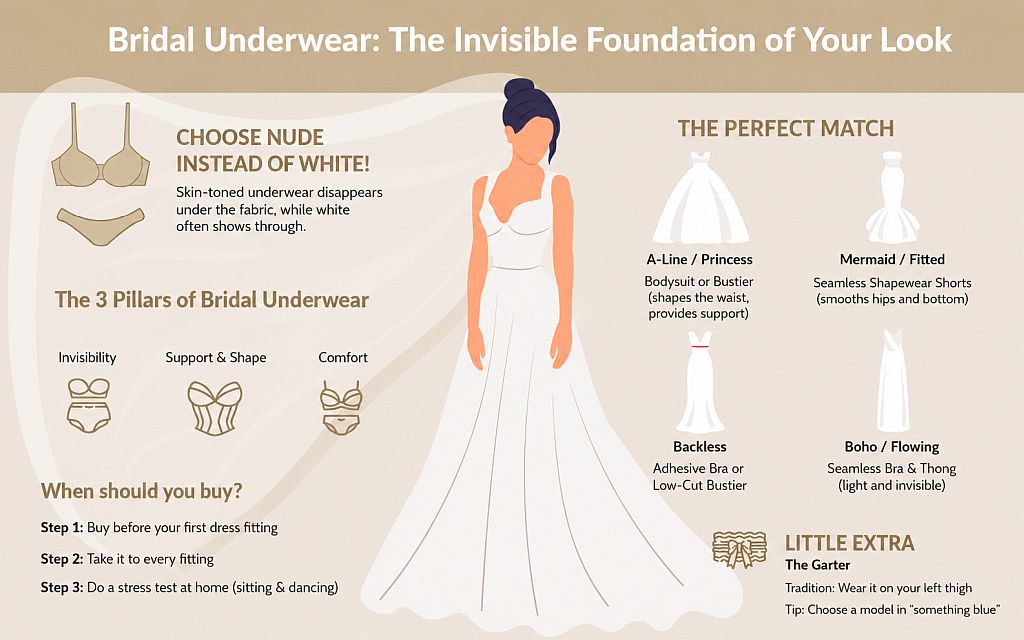
| Underwear Type | Best Suited For | Main Advantage |
|---|---|---|
| Seamless Briefs | Almost all dress styles | Invisible under fitted fabrics |
| Thong / G-String | Tight-fitting dresses, mermaid styles | No visible panty lines |
| Bodysuit | A-line and princess dresses | Shaping effect, all-in-one solution |
| Bustier / Corset | Backless dresses | Provides support without visible bra straps |
| Push-Up Bra | Sweetheart necklines, strap dresses | Enhances the décolletage |
| Seamless Bra | Empire-waist, boho, and chiffon dresses | Barely noticeable, no visible outlines |
| Shapewear Shorts | All dress styles | Smooths and shapes the silhouette |
Seamless underwear – the invisible foundation under a wedding dress
Seamless underwear is the undisputed favorite when it comes to bridal fashion. No seams mean no visible lines, no matter how closely the dress fits the body. This is especially important under fabrics such as satin or jersey, where every detail can show through. Choosing the right fabric for underwear is equally important, as it directly affects comfort, breathability, and invisibility under the dress. Anyone who has seen a perfectly fitted gown ruined by the wrong underwear will likely choose a seamless option the next time without hesitation.
Thongs and G-Strings – maximum protection against visible lines
Thongs and G-strings are the preferred choice for brides who want to ensure that absolutely nothing shows through their dress. For mermaid gowns or figure-hugging sheath dresses, they are often the most practical solution. However, fit is crucial. Even a thong can create visible lines if it is too tight or the wrong size, so comfort and proper sizing should never be overlooked.
Bustiers and corsets – support and shaping in one
Bustiers and corsets combine the functions of a bra and shaping underwear in a single garment. They are ideal for dresses with deep backs or strapless designs, providing support while remaining hidden. A well-fitted bustier can also accentuate the waistline and help stabilize the bodice, ensuring the dress maintains its intended shape throughout the day.
Push-Up bras – enhancing the décolletage
A push-up bra is a good choice when the dress features a neckline designed to highlight the décolletage. The key is selecting a bra that perfectly matches the shape of the neckline. An unsuitable push-up bra can quickly look unnatural and may disrupt the overall elegance of the bridal look.
Bodysuits – the practical All-in-One solution
A bodysuit offers a convenient all-in-one solution by keeping everything securely in place. It prevents shifting throughout the day and eliminates the risk of gaps or fabric riding up between the top and skirt. Bodysuits are particularly popular with two-piece bridal outfits and dresses featuring a fitted bodice paired with a fuller skirt.
Shapewear – the secret weapon for a flattering silhouette
Shapewear has evolved significantly in recent years. Modern designs no longer feel restrictive; instead, they gently and discreetly smooth and shape the body. For brides, this means a more streamlined silhouette, additional support, and a wedding dress that drapes beautifully from every angle. Particularly popular are shapewear shorts that extend from the waist to the thighs, offering both comfort and subtle shaping. For brands developing their own bridal collections, professional sewing shapewear production also makes it possible to tailor the cut, compression and fabric to the specific requirements of each design.
When choosing shapewear, there are several important factors to consider. First, selecting the correct size is essential. Shapewear that is too tight can create bulges and discomfort, producing the opposite of the desired effect. Second, breathability matters. A wedding day often involves hours of standing, dancing, and celebrating, so fabrics that allow the skin to breathe are crucial. Third, the shapewear should complement the dress style. A full ball gown may require different support than a fitted sheath dress.
Many lingerie manufacturers now create bridal-specific shapewear designed to meet these requirements, integrating seamlessly with modern wedding gowns while remaining virtually invisible beneath the fabric.
One important tip: always bring your shapewear to your dress fitting. This is the only way to ensure that the dress looks and feels just as good with the shapewear as it does without it, and that you remain comfortable throughout the entire day.
The garter and the wedding night
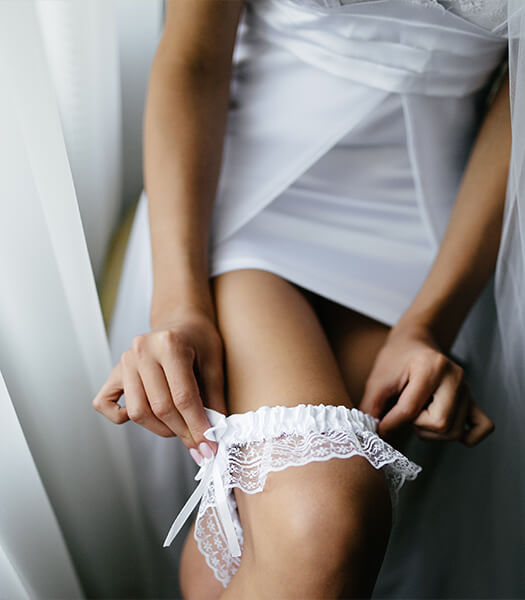
The garter is one of the most romantic accessories in wedding tradition. Today, it is no longer simply a customary item but a deliberate style choice. Whether classic white lace, a modern blush tone, or a playful design featuring a blue detail as the traditional “Something Blue,” a garter can be personalized to reflect the bride’s individual taste and become a meaningful keepsake from the day.
Traditionally, the garter is worn on the left thigh. Some brides choose to wear two garters—one to toss during the reception and another to keep as a personal memento. Brides who prefer to skip the garter toss can simply wear it as a private detail, without making it part of the celebration.
Comfort should always come first. A garter should fit securely without feeling tight or restrictive. An elastic band that is too tight may become uncomfortable after several hours, so it is worth taking the time to find a style that feels as good as it looks.
What color should you choose for wedding underwear?
The obvious answer is white – but it is not always the right choice. White underwear often shows through white or ivory fabrics more than expected, especially under thin or flowing materials. In most cases, a nude shade that matches your skin tone is a better option, as it becomes virtually invisible under almost any fabric.
For a romantic look, many brides choose ivory, blush, or soft rosé tones. These shades blend beautifully with classic bridal colors and look elegant in photos, even if the underwear becomes slightly visible at some point during the day.
For those who want to add a subtle touch of personality beneath the dress, deeper shades such as black, burgundy, or dark blue are trending in 2026. They offer a discreet yet confident contrast to the white gown and can feel like a personal style statement worn just for oneself.
How to choose underwear based on the wedding dress style
| Dress Type | Recommended Underwear | What to Watch Out For |
|---|---|---|
| A-line | Seamless briefs or bodysuit | No visible lines at the waist |
| Mermaid / Sheath | Thong, shapewear shorts | Maximum smoothness on hips and buttocks |
| Princess / Ball gown | Bodysuit, bustier, shapewear | Strong support on top, skirt hides lower part |
| Boho / Flowing | Seamless bra, thong | Light, airy, invisible under fabric |
| Backless dress | Adhesive bra, bustier | No visible bra closure |
| Empire line | Seamless briefs, light bra | Nothing should cut in under the bust |
| Two-piece | Bodysuit | Keeps everything in place, prevents riding up |
The most important rule applies to all dress types equally: always try on your underwear together with the wedding dress. What works on a hanger does not necessarily work when worn.
Materials for wedding lingerie – comfort for the entire day
A wedding lasts many hours – from the ceremony to the photo session, the reception, and dancing late into the night. What feels comfortable during a short fitting in the morning can become genuinely uncomfortable after eight hours of wear. That is why choosing the right material is far from a minor detail.
Microfiber is the most commonly used fabric for seamless bridal underwear. It is soft, stretchy, smooth under clothing, and often moisture-regulating. Cotton stands out for its breathability, but it is not always available in seamless designs and is better suited for loose, airy dresses. Lace is romantic and visually beautiful, but it can cause irritation after long hours, especially for sensitive skin – ideally, choose versions with a soft inner lining. Silk and satin feel luxurious and glide smoothly against the skin, but they can be slippery and are not equally suitable for every body type.
For those who want a safe all-round solution, a high-quality microfiber–lace combination is often the best compromise between aesthetics and comfort: visually elegant, comfortable to wear, and suitable for the entire day.
When should you buy bridal underwear?
Ideally, bridal underwear should be purchased before the first wedding dress fitting – or at the latest at the same time. Trying on a dress without the proper underwear can lead to a misleading impression of how it truly fits. This is especially important for structured bodices, built-in corsets, or backless designs, where underwear plays a crucial role from the very beginning.
By at least three months before the wedding, the decision should be finalized. This allows any necessary dress alterations to be made with the chosen underwear already taken into account by the tailor. Last-minute purchases shortly before the big day are possible, but risky – new underwear may pinch, shift, or feel different in real-life wear compared to a short fitting.
Thinking early about what to wear under a wedding dress reduces stress later on and gives much more flexibility for adjustments and a perfect final fit.
Common mistakes and how to avoid them
When it comes to what to wear under a wedding dress, surprisingly many avoidable mistakes still happen. Here are the most common ones:
- Wrong size – Bridal underwear must fit perfectly: not too tight, not too loose. After the final dress alterations, it is worth double-checking the size, especially if body measurements have changed.
- Buying underwear after the dress – Those who choose the dress first and look for underwear later often realize that no suitable option exists – or that the dress would need further alterations. The order should ideally be reversed or at least planned together.
- Focusing only on appearance – Beautiful lace is useless if it causes discomfort after two hours. Comfort is the absolute priority on a long wedding day.
- Wearing new underwear for the first time on the wedding day – A mistake most brides only make once. Every new piece should be worn at least once beforehand and tested together with the dress during the final fitting.
- Forgetting the garter – Small but meaningful for many brides. Those who want to wear one should order it in time, as attractive models in special sizes or with custom details often sell out quickly.
- Skipping shapewear at the fitting – If shapewear is planned for the wedding day, it must be worn to all fittings. A dress that fits perfectly without shapewear may suddenly feel too tight with it – and vice versa.
Conclusion – the right underwear as the key to the perfect bridal look
Choosing the right underwear is a crucial step toward achieving the perfect bridal look, yet it is often underestimated. It affects not only how the dress fits and falls, but also how comfortable and confident the bride feels throughout the entire day. Visible lines, straps that dig in, or unsuitable shapes can quickly disrupt the overall impression of an otherwise perfect gown.
Modern bridal fashion in 2026 clearly prioritizes comfort, invisibility, and perfect fit. Seamless underwear, well-fitted shapewear, and carefully selected bra solutions ensure that the dress can reach its full potential. At the same time, they allow freedom of movement – from the ceremony to the photo session and all the way to the dance floor.
Those who treat underwear as an integral part of the bridal outfit and choose and test it together with the dress early on avoid stress and unpleasant surprises on the wedding day. The result is a harmonious overall look where not only the dress but also the feeling is right – and that is exactly what makes the big day truly unforgettable.
FAQ – Frequently asked questions about what to wear under a wedding dress
Under a white dress, white underwear is often the worst choice, as it can be more visible than expected under light or slightly sheer fabrics. Skin-toned shades that match your natural complexion are much more suitable. Seamless models in nude or beige are especially ideal, as they prevent any visible lines – whether seams or color – ensuring a smooth, invisible look even under thin or flowing materials.
A very fine, sheer pair of tights in a natural skin tone is the best option, as they remain nearly invisible and do not disrupt the overall look. Alternatively, hold-up stockings are an elegant choice, especially for dresses that require more freedom of movement or a softer aesthetic. For tight-fitting dresses, wide waistbands should be avoided, as they can show through the fabric. In such cases, shaping tights with a smoothing effect are often the better solution.
The right shapewear depends heavily on the dress silhouette. For fitted styles such as mermaid or sheath dresses, shapewear shorts provide a smooth line from waist to thigh. For A-line or ball gowns, a shaping bodysuit or high-waisted shaping briefs are usually sufficient, as the skirt naturally conceals the lower body. The most important factor is sizing: shapewear should shape and support, but never feel tight or uncomfortable – especially on a long wedding day.
Ideally, you should wear exactly the same underwear to your dress fitting that you plan to wear on your wedding day. This includes the bra style, shapewear, and even similar shoes to accurately assess the overall look and fit. A strapless bra or special bustier should be brought early on and tested with the dress. Everyday underwear can distort the result and lead to unexpected differences in fit and silhouette on the big day.