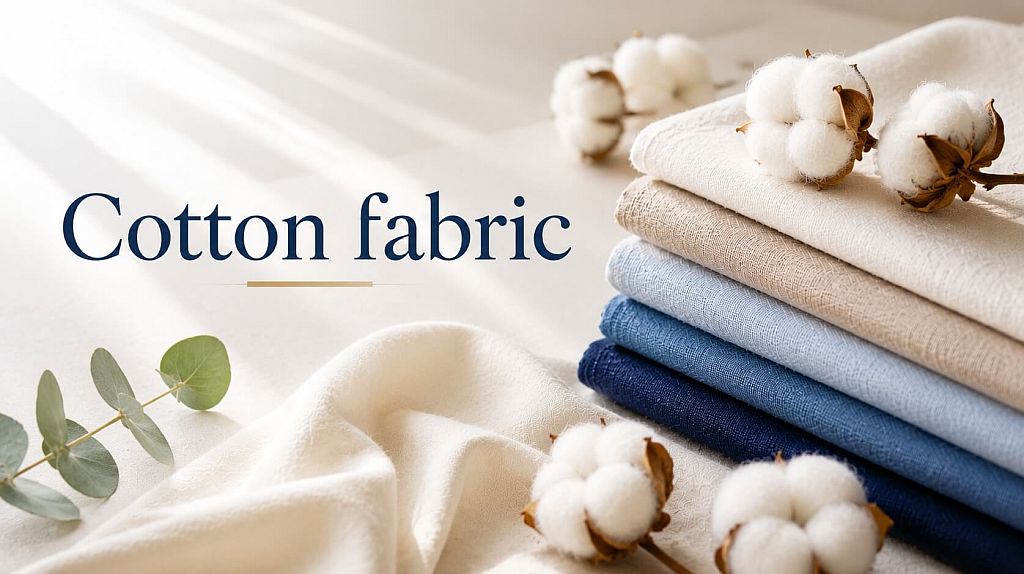
Cotton fabric – properties, advantages and use in clothing production
Cotton fabric is one of the most widely used materials in clothing production. Whether underwear, T-shirts or uniforms – cotton has been among the most processed natural fibres worldwide for decades. The reason is simple: no other material combines wearing comfort, breathability and versatility in quite the same way. However, not every cotton fabric is the same – quality, processing and fibre type can differ considerably. In this article we show what properties distinguish cotton fabric, which types of cotton exist and which garments the material is best suited for.
What makes cotton fabric so special as a material?
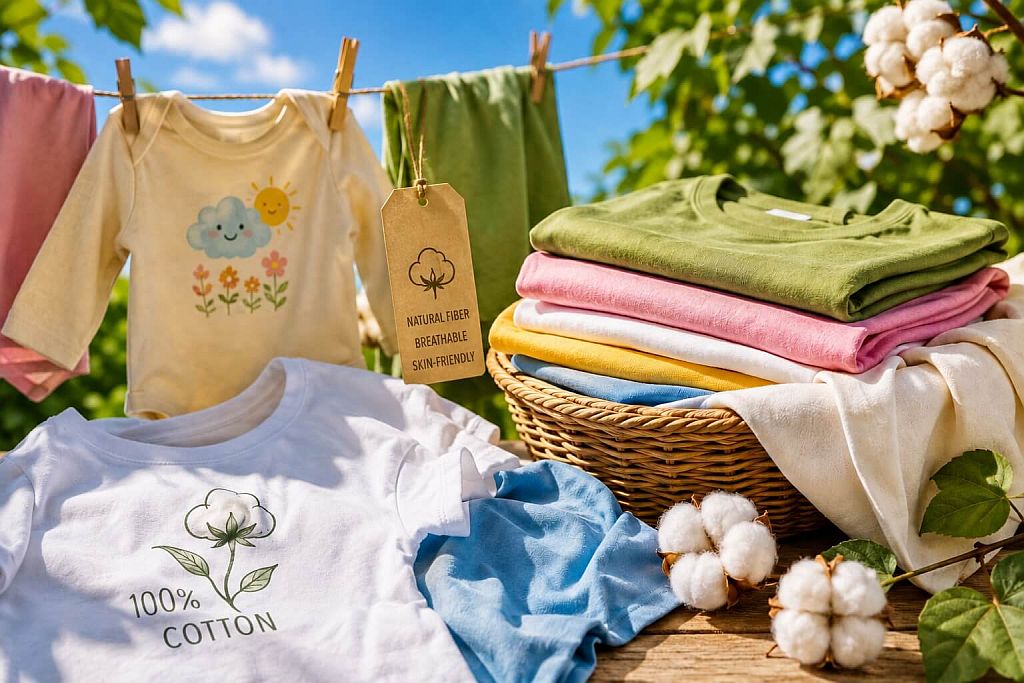
Cotton fabric stands out above all for its high breathability. The natural fibre allows air to circulate and effectively transports moisture away from the body, which is a decisive advantage particularly for close-fitting clothing. At the same time, cotton absorbs moisture well without feeling clammy – a property that synthetic fibres can rarely match.
Added to this is its soft, skin-friendly feel. Cotton fabric generally causes no irritation and feels comfortable even on sensitive skin, which makes it a popular choice for underwear and baby clothing. For an underwear manufacturer, these properties make cotton a particularly versatile material for comfortable, skin-friendly underwear collections. As a natural fibre, cotton is also free from the microscopic plastic particles that synthetic fabrics can release during washing.
A further advantage: manufacturers can dye and print cotton fabric easily, making it particularly attractive for brands with individual designs. However, cotton offers less elasticity than synthetic materials, so manufacturers should consider this when choosing the right application.
Which types of cotton are there and how do they differ?
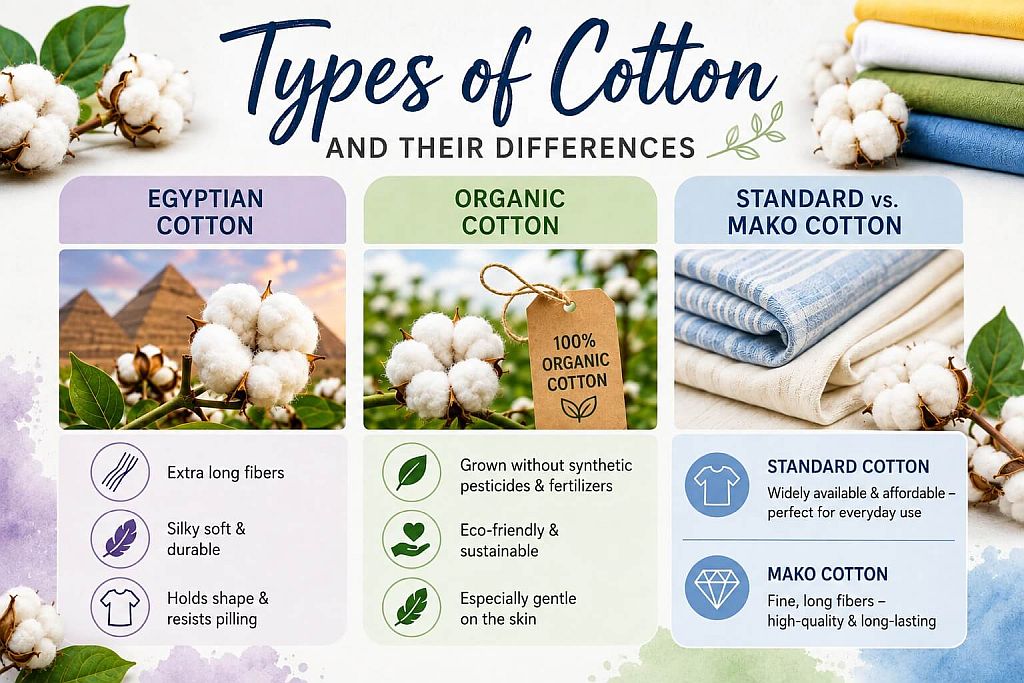
Not every cotton is the same – fibre length and cultivation method significantly influence quality and feel.
Egyptian cotton (Pima cotton)
Egyptian cotton is one of the highest-quality types of cotton in the world. Its particularly long fibres (long-staple cotton) enable a finer, smoother yarn, which results in a silky feel and higher tear resistance. Fabrics made from this type of cotton also tend to pill less and retain their shape better even after frequent washing.
Organic cotton
Organic cotton grows without synthetic pesticides or fertilisers and offers particularly strong benefits in terms of sustainability and skin-friendliness. As a fabric for underwear, organic cotton is especially interesting when a soft feel and natural material composition are important. If you want to learn more about eco-friendly material alternatives and their certifications, our article on sustainable fabrics provides a detailed overview.
Standard cotton vs. Mako cotton
Standard cotton is the most widely used and most affordable variety, making it suitable for most everyday applications. Mako cotton has particularly fine, long fibres and offers higher quality than standard cotton, while remaining more affordable than Egyptian cotton. Manufacturers frequently use it for high-quality bed linen and outerwear.
Cotton fabric compared to other materials
| Material | Breathability | Elasticity | Care requirements | Typical use |
|---|---|---|---|---|
| Cotton fabric | Very high | Low (without elastane) | Medium, can shrink | Underwear, T-shirts, uniforms |
| Modal | High | Medium | Low, shape-stable | Close-fitting clothing, loungewear |
| Polyester-elastane | Medium | Very high | Low, quick-drying | Sportswear and swimwear |
In direct comparison to modal, which we have presented in detail in our article on modal fabric, cotton scores above all with its more robust structure and wider availability, while modal impresses with its smoother feel and higher shape stability. For brands weighing up both materials, it is worth looking directly at the intended use: cotton is the more versatile choice, modal the easier to care for.
Cotton blended fabrics – when does blending make sense?
Pure cotton has its limits in certain applications, particularly when a garment needs high elasticity or strong shape retention. This is where cotton blended fabrics come into play.
Cotton-elastane combines the wearing comfort of the natural fibre with the stretchiness of elastane (usually 3–5% content). This blend is particularly suitable for close-fitting garments such as underwear or leggings that need to adapt to movement without losing the pleasant feel of cotton.
Cotton-polyester, on the other hand, primarily improves the shape stability and crease resistance of the fabric, making it easier to care for. This blend is frequently used for workwear and uniforms, where robustness and easy care are the priority.
Which garments is cotton fabric best suited for?
Depending on the area of application, the requirements for cotton fabric vary considerably.
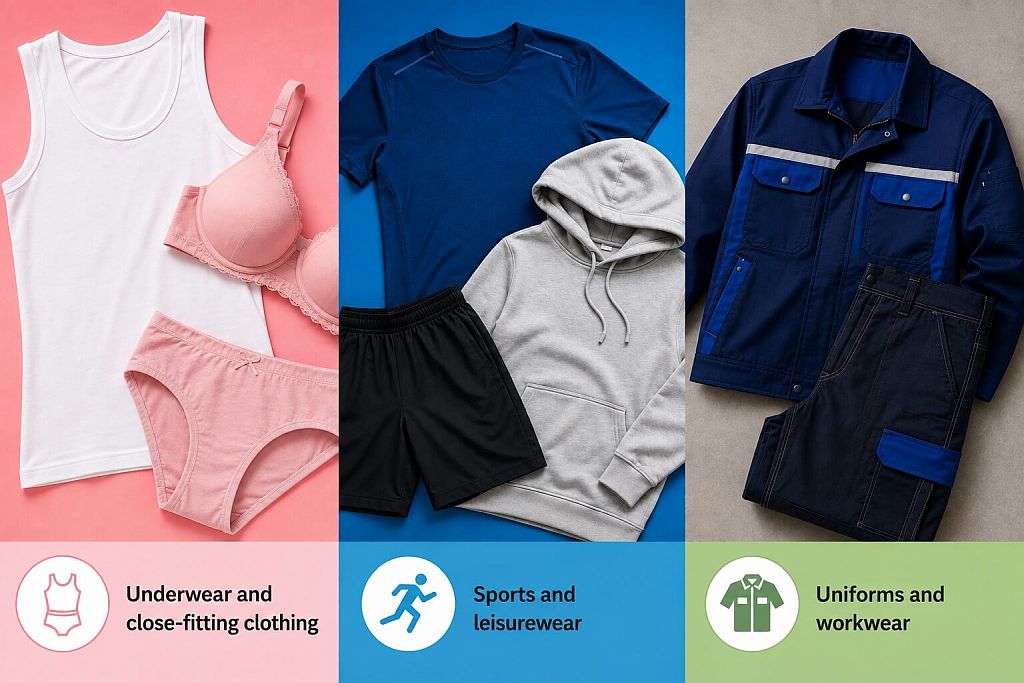
Underwear and close-fitting clothing
For underwear, cotton fabric remains one of the most popular material choices due to its skin-friendliness and breathability. A cotton content with a small elastane addition provides the necessary fit without compromising natural wearing comfort.
Sewing Sportswear and leisurewear
For lightweight leisurewear, cotton fabric works well, but for intense sporting activity, pure cotton reaches its limits, as it stores moisture rather than wicking it away. As a fabric for sportswear, cotton is therefore best suited to lighter activities and relaxed garments, while cotton-polyester blends or functional cotton fabrics with moisture-wicking finishes prove more effective for demanding training.
Uniforms and workwear
For uniforms and workwear, robustness and easy care are the priority. Cotton blended fabrics with a polyester content offer the right balance between wearing comfort, shape stability and durability in daily use.
What should one pay attention to when purchasing cotton fabric?
When selecting the right cotton fabric for production, the following points are worth examining:
- Grammage: Depending on the intended use, the ideal weight per square metre varies considerably – lightweight summer clothing requires fewer grams per square metre than robust workwear.
- Weave: More densely woven fabrics are more durable, while more loosely woven varieties are airier and lighter.
- Fibre content and blend ratio: The proportion of cotton to elastane or polyester determines elasticity and care properties.
- Certifications: Those who value sustainable production should look for recognised labels – our article on textile certifications provides a detailed overview.
- Sample material: Before series production, every fabric should be tested on a prototype to check shrinkage behaviour and processing quality.
Care instructions for clothing made from cotton fabric
Cotton fabric is generally easy to care for, but tends to shrink if treated incorrectly. On the first wash, the fabric can contract by up to 5% – an effect that should already be accounted for during pattern development.
For care, washing at moderate temperatures in accordance with the care label is recommended, as water that is too hot increases shrinkage. For drying, air drying is gentler than a tumble dryer, which additionally strains the fibres and causes colours to fade more quickly. Those who wish to correctly interpret the symbols on the care label will find detailed explanations in our article on textile labels.
Light ironing at a medium temperature reliably smooths cotton fabric, with a slightly damp fabric making ironing easier and creases disappearing more quickly.
Cotton fabric remains, for good reason, one of the most widely used materials in clothing production – versatile, skin-friendly and available in numerous qualities. Whether pure cotton for underwear or blended fabric for uniforms: the right choice always depends on the planned area of application. As an experienced production partner, our sewing workshop is happy to advise you on the right material selection for your next collection – from sample material to the finished series.
FAQ – Frequently asked questions about cotton fabric
This depends above all on the weave and the pre-treatment of the fabric. Cotton fabrics that have not been pre-washed (non-sanforized) can shrink considerably more on the first wash than already treated varieties. For series production, it is therefore worth specifically asking for sanforized cotton in order to minimise shrinkage behaviour from the outset.
This is usually due to limescale deposits from hard water or washing temperatures that are too high, which attack the fibre structure. A detergent without aggressive bleaching agents and avoiding over-drying in the tumble dryer help to maintain the original softness for longer.
For light movement or recreational sport, pure cotton is quite suitable, but for intense training it quickly becomes heavy and unpleasantly damp. Cotton-polyester blended fabrics with moisture-wicking finishes offer a good compromise here between wearing comfort and functionality.
With combed cotton, shorter fibres and impurities are removed before spinning, resulting in a smoother, more even and more durable yarn. Uncombed cotton is cheaper to produce but tends more towards irregularities and slight pilling in the fabric.
A simple touch test often reveals more than the label. High-quality cotton fabric feels dense and supple without appearing thin or transparent. It is also worth checking the thread density and carrying out a short wash test on a sample piece to assess shrinkage behaviour in advance.
Yes, cotton absorbs colours and prints particularly well due to its natural absorbency, which results in vivid, long-lasting results. What is important here is the appropriate pre-treatment of the fabric, as untreated cotton can absorb colour less evenly than pre-washed varieties.