
How to wash period underwear properly? – tips and instructions
Washing period underwear might sound simple, but it is actually the key factor in whether your briefs remain absorbent, odor-free, and reliably leak-proof over time. Many issues—such as reduced absorbency, a lingering “musty” smell, stiffer materials, or a leaking membrane—do not come from the product itself. They come from incorrect care. Common causes include water that is too hot, unsuitable detergents, fabric softener, or improper drying.
In this article, you will therefore not only find background information but also a complete step-by-step guide for washing. This way, your period underwear stays hygienically clean – and performs as it should, month after month.
Understanding how to wash period underwear properly is the key to maintaining its absorbency, hygiene, and long-term durability.
Period underwear as an alternative to pads, tampons, and menstrual cups
Period underwear is increasingly seen as a real alternative to traditional menstrual products such as pads, tampons, and menstrual cups. It combines protection, comfort, and reusability in one product. To better understand its function and how to wash period underwear properly, it helps to look at its structure.
Period underwear is typically made up of multiple layers. The layer closest to the skin is soft and skin-friendly, designed to quickly absorb moisture and draw it away from the body.
Below that is an absorbent core that securely locks in the fluid, while an additional leak-proof layer or membrane significantly reduces the risk of leakage. Depending on the model and absorbency level, period underwear can fully replace a sanitary pad or serve as extra backup protection alongside a tampon or menstrual cup—for example at night or on heavier flow days.
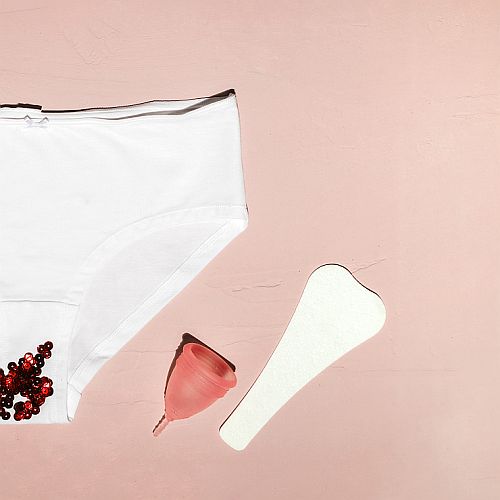
Comparison to sanitary pads
Sanitary pads are a simple and widely used option, but depending on the brand and fit, they can shift out of place, feel damp more quickly, or cause chafing during movement. Period underwear, on the other hand, fits like regular underwear and does not rely on adhesive strips or folds, which many users find more comfortable and discreet. Thanks to its layered functional design, it often provides greater freedom of movement and a consistently drier feeling during wear.
Comparison to tampons
Tampons are discreet and especially popular during sports, but they can dry out the vaginal environment and are not comfortable for everyone, particularly due to insertion or a possible feeling of pressure.They also need to be changed regularly. Period underwear stays outside the body, so nothing is inserted. Many users find this more body-friendly and comfortable, as it avoids internal products.
Comparison to menstrual cups
The menstrual cup is also reusable and cost-effective in the long term. However, it requires practice, since correct insertion, checking the fit, and emptying and cleaning need to be learned and become easier over time.
For some, this can feel inconvenient, especially when on the go. Period underwear is different. You simply put it on and go. It has a very low entry barrier, requires no handling of blood, and no learning curve for insertion.
Benefits of period underwear
Period underwear is ideal for those who prefer an “all-in-one” solution:
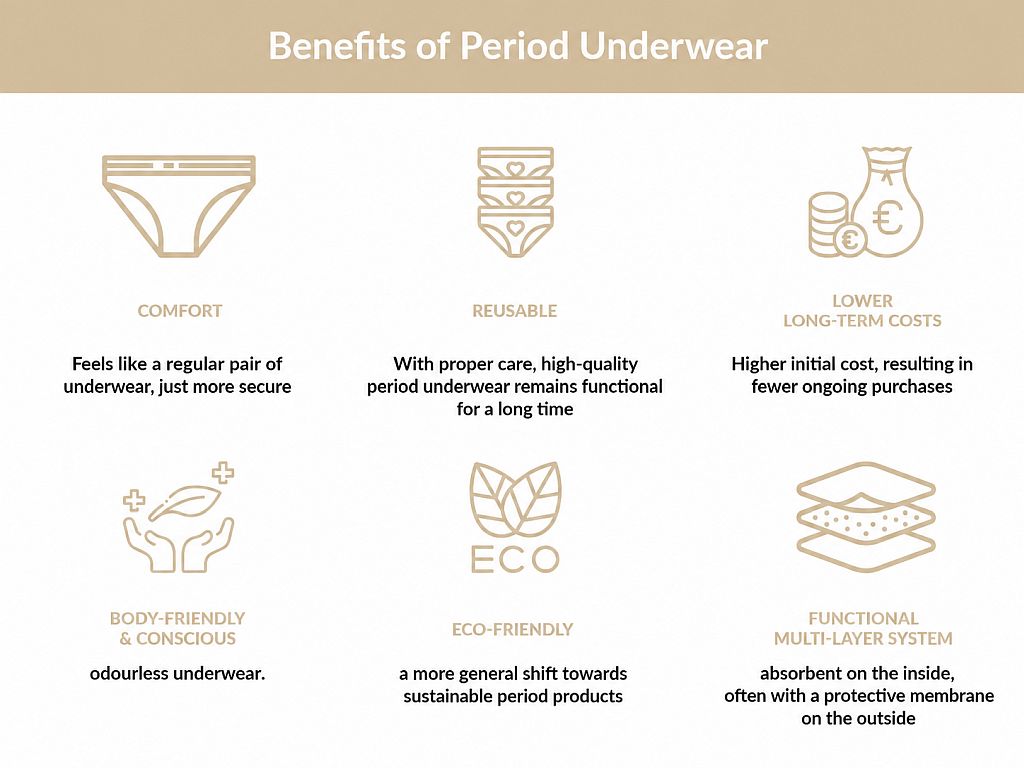
- Comfort – No shifting like some pads, no dryness like tampons – it often feels like regular underwear, just more secure. Many users appreciate that it stays in place and does not require constant adjustment.
- Reusable – With proper care, high-quality period underwear remains fully functional for a long time, making it a durable and reusable option.
- Cost over time – While the initial purchase is higher, it reduces the need for continuous disposable product purchases. Especially with regular use, this often becomes more economical in the long run.
- Body-friendly and conscious choice – Many models are free from fragrances and unnecessary additives. In addition, period underwear fits well into the growing shift toward more sustainable and eco-friendly menstrual products.
Why proper care of period underwear is so important
Period underwear is not a “normal pair of briefs,” but a functional multi-layer system: a skin-friendly top layer, an absorbent core, and often a protective leak-proof membrane underneath. Because of this structure, it is more sensitive to incorrect care than regular underwear. If it is not cleaned properly, the effects are not only visible, but mainly noticeable in its performance: reduced absorbency, faster odor development, or loss of leak protection. With a few simple rules, period underwear remains hygienic, comfortable, and reliable even after many cycles. Below you will learn how to wash period underwear correctly.
Preserving absorbency
The absorbent layers only work at full capacity when they are not clogged. Fabric softeners, “conditioning” additives, or greasy residues can coat synthetic fibers.
As a result, liquid can bead off or absorb more slowly, and the underwear may feel damp much sooner. The absorbency can seem “cut in half,” even though the material itself is still intact.
Hygiene and odor prevention
Odors are usually not caused by menstrual blood itself, but by bacteria multiplying in a warm and moist environment. If residues remain in the layers, these microorganisms have more “nutrients” to grow. Proper care therefore means: consistently removing residues, not overloading the material, and avoiding conditions that promote odor formation.
Durability and material protection
Many period underwear models contain membranes, elastic fibers, and delicate functional textiles. Excessively high temperatures, harsh detergents, or improper drying can cause seams to lose elasticity more quickly and make membranes brittle. Gentle washing helps preserve fit, leak protection, and wearing comfort significantly longer.
Preparing period underwear – before it goes into the wash
The quality of materials and the construction of functional layers in period underwear affect how easy it is to clean after use and how long absorbency and leak protection last. Many problems like stubborn residue, odor, or reduced performance do not start during washing. They often begin with improper handling right after wearing.
Briefly rinsing the underwear and storing it correctly makes washing easier. It also protects the membrane and seams and helps maintain hygiene and comfort over time.
Immediate rinsing – why it matters
The faster residues are loosened from the fibers, the easier they are to fully remove later. This reduces strain on the functional layers and supports both hygiene and odor prevention. The key principle here is simple: do not let residues dry in.
Avoid soaking – a common mistake
Long soaking (especially for several hours) may seem logical, but it is often counterproductive. It can actually encourage odor formation and unnecessarily stress the functional layers. In addition, residues do not get removed more effectively. Instead, they can spread in the water and settle back into the material.
Short-term storage – but done correctly
If washing is not possible immediately (for example when traveling), a breathable but hygienic temporary solution is important: do not leave the underwear exposed, but also avoid storing it sealed in moisture for too long. The goal is a short, controlled storage period until it can be washed properly.
Using a laundry bag
A laundry bag protects period underwear in the washing machine from friction, hard elements (such as zippers or metal buttons), and deformation. This is especially important for models with delicate lace, fine seams, or thin membranes. It also reduces the risk of the underwear getting tangled with other laundry items.
Cleaning period underwear – washing machine or hand wash?
Both methods can work – the key depends on the material, your daily routine, and how delicate the specific model is. Here is a clear comparison how to wash period underwear:
| Criterion | Washing machine | Hand wash |
|---|---|---|
| Everyday practicality | Very high (convenient, time-saving) | Medium (more effort, mainly for exceptions) |
| Material protection | Good with gentle cycle + laundry bag | Very good if handled gently |
| Cleaning performance | Consistently effective when settings are correct | Good, but depends on thoroughness |
| Hygiene and odor removal | Very good if residues are properly removed | Good if rinsing is done thoroughly |
| Risk to functional layers | Higher if wrong program/temperature/spin is used | Lower, as long as there is no rubbing or wringing |
| Suitable for travel | Not really | Yes (hotels, trips, emergencies) |
| Time and effort | Low | Higher |
Practical tip: Many people use the washing machine as their standard method and hand washing as a backup (for travel, delicate models, or quick cleaning). The key is not “either/or,” but rather choosing a method that is gentle on the material and avoiding any care products that could damage the functional layers.
Recommended temperature: 30°C
For most period underwear, 30°C is the best balance: it is thorough enough for everyday soiling while still being gentle on elastic areas, seams, and absorbent layers. This temperature supports effective cleaning without putting unnecessary stress on the functional materials – especially important with regular use.
Why hot water can damage the protective membrane
Washing at high temperatures can significantly accelerate the aging of the waterproof layer. Typical effects include:
- the membrane losing elasticity and becoming brittle or misshapen
- changes in the structure of the functional layers
reduced leak protection and absorbency performance – sometimes noticeable after just a few hot washes, or in extreme cases even after a single one
How to wash period underwear properly – step by step
Time needed: 2 hours
Period underwear is designed to reliably absorb fluid while still feeling comfortable against the skin. For this to work long-term, what matters most is a clean but gentle care routine. The following steps are practical for everyday use and help prevent odors, preserve absorbency, and avoid unnecessary stress on the membrane (the leak-proof layer).
- Rinse with cold water
Rinse the underwear immediately after wearing with cold water until it runs mostly clear. Cold water is important because blood (protein components) sets more easily when exposed to heat. The easiest method is under running water or in a basin: gently squeeze, rinse again, and repeat. There is no need for excessive rinsing – the goal is simply to remove the bulk of the residue so that less remains for the main wash.
- Pre-treat heavier stains
If it was a heavy flow day or the underwear has been sitting for a while, a short pre-treatment can help. Use cold water and, depending on the fabric’s sensitivity, a small drop of mild detergent. Gently work it in, let it sit briefly, and rinse again. Avoid aggressive stain removers, bleach, or “hygiene additives” on suspicion: many of these can damage functional layers and elasticity or leave residues that later reduce absorbency.
- Hand washing – how to do it
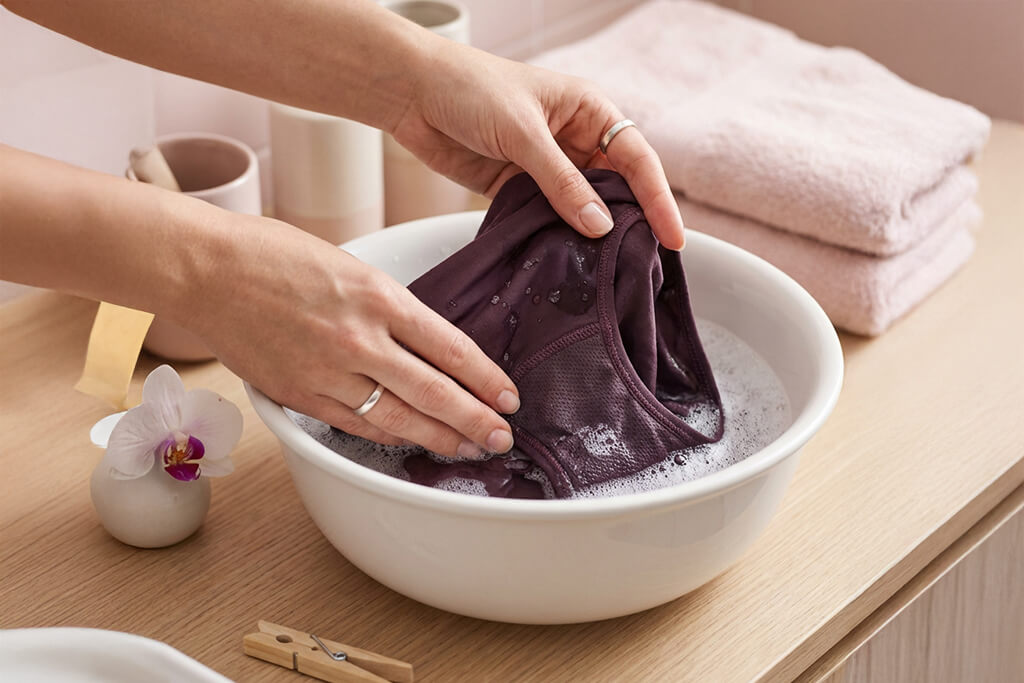
Hand washing is ideal when traveling, cleaning a single item, or dealing with delicate models. Fill a basin with lukewarm to cool water, add a small amount of mild detergent, and gently move the underwear through the water for a few minutes. Rubbing or strong wringing is unnecessary and can strain seams and elastic fibers. Afterwards, rinse thoroughly until no detergent remains and gently press out excess water (do not twist).
- Machine washing – how to do it
For most period underwear, the washing machine is perfectly fine when used correctly. Wash ideally at 30°C on a gentle or delicate cycle. Place the items in a laundry bag to protect seams, membranes, and elastic edges—especially when washing with other laundry. Also avoid overloading the machine, as period underwear needs enough movement in the water to be properly cleaned.
- Choosing the right detergent
The detergent often determines whether functional layers remain “open” or become clogged over time. A mild, liquid detergent that rinses out easily works best. Strong surfactants, oily additives, or heavy fragrances can leave residues in the fabric. If you have sensitive skin, a fragrance-free detergent is a good choice—not only for comfort, but also because fewer additives remain in the fibers.
- Proper drying
After washing, gently reshape the underwear and let it air dry. A drying rack at room temperature with good airflow is ideal. Direct heat sources (radiators, fireplaces, heaters) should be avoided, as heat accelerates the aging of membranes and elastic fibers. If you are in a hurry, a well-ventilated room or a place with steady air circulation works best—drying speed depends more on airflow than on heat.
Can you tumble dry period underwear?
In short: it’s better not to. Even though it can be tempting to dry period underwear quickly, a tumble dryer is usually the most stressful option for functional fabrics.
Inside the dryer, heat and mechanical movement act together. This can make the waterproof membrane lose elasticity, become slightly misshapen, or wear out faster in the functional layers.
Even without visible damage, performance can decline over time. This may show as reduced leak protection or a different wearing feel.
The safest method – air drying
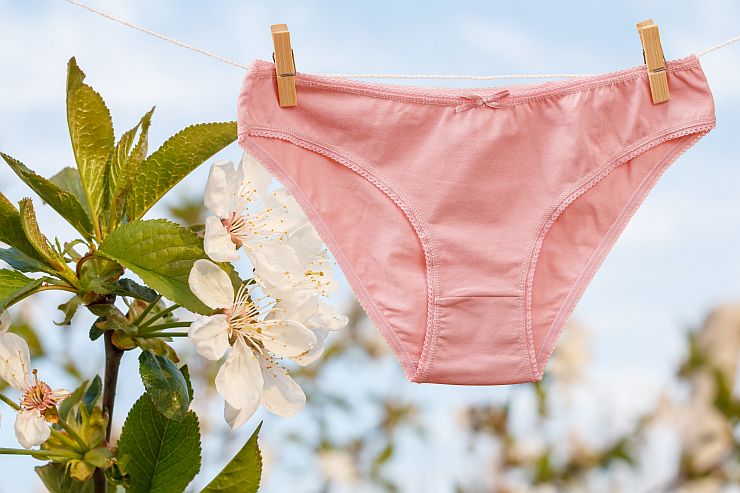
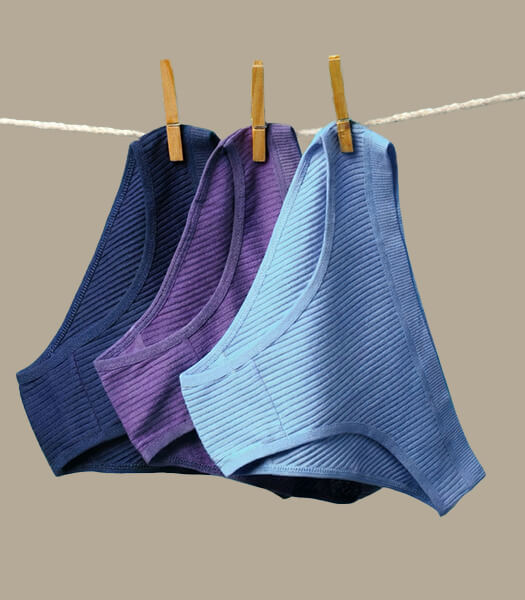
The most reliable way to dry period underwear is air drying at room temperature. Hang the underwear so that air can circulate well around it, and avoid direct heat sources. Good airflow helps the fabric dry efficiently without stressing the material.
If you have several pairs, a simple routine works best: wash in the evening, let them dry overnight – and most models are ready to wear again in the morning.
For travel, it is often more practical to bring two or three pairs for rotation rather than relying on a “tumble dryer emergency solution.”
Conclusion – proper care for long-lasting performance
Period underwear is most reliable when rinsed with cold water after use, washed gently at low temperatures, cleaned with a mild detergent, and air-dried.
The key is to avoid common care mistakes that slowly damage the functional layers. Fabric softener can coat the fibers and reduce absorbency. High washing temperatures can age the membrane and elastic parts faster. Direct sunlight or strong heat during drying can also stress the material.
As a result, fit, leak protection, and comfort may decline earlier, even if the underwear still looks fine on the outside. With a gentle and consistent care routine, hygiene, comfort, and functionality remain stable over the long term.
That is why knowing how to care for period underwear properly is essential to maintain its performance across many cycles.
Period underwear works through several layers: a skin-friendly top layer, an absorbent core, and often a protective membrane against leakage. For many users, it becomes a true alternative because it combines several advantages in one product.
Frequently asked questions about washing period pants
Yes, you can usually do this—provided you briefly rinse the underwear with cold water beforehand and wash it at an appropriate temperature (usually 30°C) on a gentle cycle. We recommend using a laundry bag to protect the functional layers and seams. You should also avoid washing very delicate textiles or strongly linting fabrics (such as some fleece materials) together, as they can leave residues that settle into the functional layers.
Dried stains can often be removed by first soaking the fabric in cold water. A gentle pre-treatment with a small amount of mild liquid detergent can also help: lightly work it in, let it sit for a few minutes, and then wash as usual. It is important to avoid hot water, as it can “set” stains rather than remove them. Harsh stain removers or bleach are usually unnecessary and may damage the functional performance of the underwear.
Period underwear should be washed after every use—even if it still feels “clean enough.” This ensures hygiene, prevents odor buildup, and keeps the functional layers performing properly over time. If a pair was only used as backup protection and absorbed very little, it still should be washed before being stored again.
In most cases, no. A regular mild detergent and a proper wash cycle are sufficient. Special disinfecting additives or hygiene rinses are often unnecessary and can even be harmful, as they may leave residues or accelerate material wear. If medical hygiene requirements apply, always follow the manufacturer’s care instructions or seek medical advice.
This depends on cycle length, flow intensity, and washing routine. For everyday use, 3 to 5 pairs are often a good starting point. One is worn, one is in the wash, one is drying, and one or two serve as backup for heavier days or travel. If period underwear is used as the main protection (including at night), 5 to 7 pairs usually create a more comfortable routine.
Normally no—provided the underwear is rinsed before washing and the machine is maintained regularly. Odors are more likely caused by residues left in the fabric for too long or deposits inside the washing machine (for example, if hot washes are rarely used). Helpful habits include quick pre-rinsing, keeping the detergent drawer clean, running occasional maintenance cycles, and drying the underwear promptly.
In principle, yes—but it is more complex than making regular underwear, as multiple functional layers must be combined correctly to ensure leak protection, absorbency, and comfort. Anyone considering custom-made period underwear should look for tailors or seamstresses experienced with technical textiles and clarify in advance the desired absorbency level and membrane construction. For most users, ready-made products are the easier solution, while custom options can be useful for specific fit requirements.