
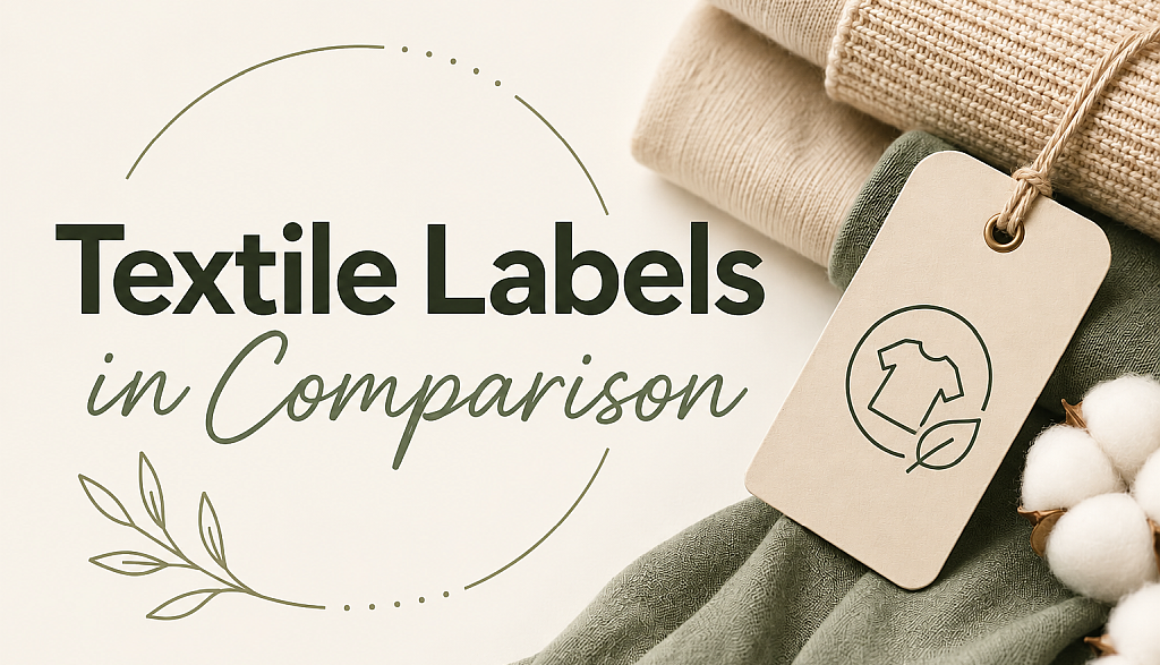
Textile labels for clothing compared – which certifications really matter for clothing?
The demand for transparently produced clothing is steadily growing. More and more consumers and companies want to know what materials textiles are made from, under what conditions they are produced, and whether certain environmental or quality standards have been met. This is where textile labels play an important role: they are intended to provide guidance and show which requirements a product or manufacturing process meets.
For clothing brands, retailers and manufacturers, certifications have long been more than just a marketing tool. They can be an important factor when selecting materials, suppliers and production partners. Especially for sewing underwear, sportswear, children’s clothing and sustainable collections, companies are increasingly looking for certified fabrics and traceable production processes.
However, the wide range of different labels does not always make the choice easy. While some certifications primarily confirm that textiles are free from harmful substances, others focus on ecological materials, recycling or social standards throughout the supply chain.
In this article, we look at which textile labels are particularly relevant, who is behind the certifications and how important standards such as OEKO-TEX®, GOTS, GRS and bluesign® differ from one another.